
Heavy’s Blog – October 2012
Queen Elizabeth Foundation on Ben Nevis – Mountain Bike and a humbling experience.
Posted on October 1, 2012 by heavywhalley.MBE

The wee trip up the Ben despite the weather proved a great day out. The mountain path or Tourist route or pony track was at times purgatory and the weather forecast was threatening. Myself and Ian Kelly took a group up from the Charity The Queen Elizabeth Foundation. We had a group of 13 and after an early start from home up at 0430 to pick Ned up at 0600 then drive and meet and greet the walkers in Fort William at 0745 it was all go. We gave a quick brief and were soon at the Glen Nevis car-park and away by 0830. It was a steady pull up a busy Ben Nevis but we were soon going well and meeting all the different people on the track. A group of over 50 Swedish school kids came blasting past plus the usual 3 Peaks crowds it was a steady day despite the weather. The path is in good condition but the rubbish on it awful we picked a lot up on the way down. The weather came in near the top where a group of 6 mountain bikers came down from the summit,out of the mist along the path, incredible. Then we met two lovely lassies who had not got to the summit but had put their make up on for the descent? It is an incredible look at life in all forms on the way up and down the Ben. The last half hour was pretty wild as we were hit by a squall. Gloves and hats and even balaclavas were on as the Ben reminds you who is in charge! Apart from one of the group who assured me he was a “plasterers” and never used gloves he was used to the cold and did not use them! The mist and rain were with us for the next hour so it was the usual quick misty photo stop and then off into the weather again. The group was overjoyed at getting to their summit and it is grand to share their happiness for a solid achievement.
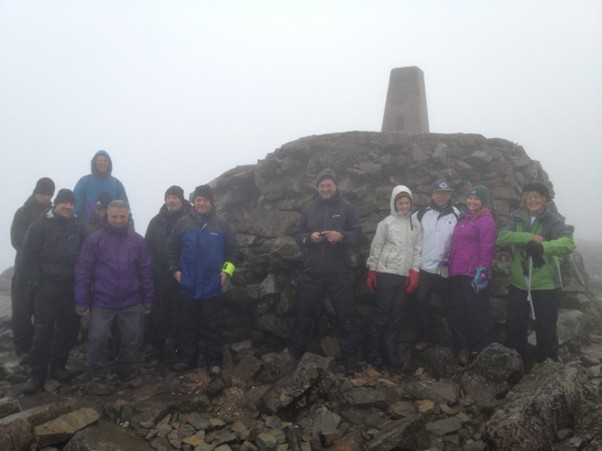
John, Paul, Jonathan, Tony, David, Lucy, Emma, Dave, Kevin, Tony, Noel, Tom- well done.
Mountaineers sometimes forget that it is a huge ambition for many non mountaineers and walkers to climb the Ben. It was only half way through the day and most found the path hard work on the descent keeping together in the poor weather was important for safety and ensuring that gloves and hats were not lost in the strong winds. It is amazing no matter how many times you take a group out that when the weather changes people cope very differently. You have to keep an eye on them all. Worth remembering ! All were fine and we sorted the worlds problems on the way down.
As the weather cleared we met a big lad in military kit coming down slowly near the last zig – zag before the red burn. He was looking in pain and had a huge rucksack. We had a chat and we asked him if he was okay he said he was fine we talked a bit. I then mentioned my knees and all my aches and pains and we had a bit of a laugh. It was only when stopped at the Red burn that he told us had lost his leg to an IOD in Afghanistan and was having trouble with his artificial leg. He had recently left the Army and was settling down in a new environment in Wales. We had a laugh and the painful descent was now a lot easier for me feeling rather daft at my complaining about my minor injuries. My new friend “said little, but said a lot” how he coped with his disability, the future and the pain on the descent was humbling. What is this war doing to such people? We left him after with about 30 minutes from the end of the day, a chance meeting . The people on the hill were working for the Charity Queen Elizabeth Foundation who also work with ex servicemen and they made contact with each other by this chance meeting. Hopefully they can help in some way?

They specialises in developing people’s abilities to achieve sustainable employment. They focus on tailoring individual skills to meet employers’ needs. QEF Vocational Services has over 75 years of experience in designing and delivering nationally recognised training courses. Our goal is to achieve long-term employment for you. The team offers a personalised service starting from an initial skills assessment and programme design, through to employment and further development in the workplace. Great people to know!
More on Ben Nevis rubbish on the hill – Drive with care – watch the animals please!
Posted on October 2, 2012 by heavywhalley.MBE
After getting back from the hill from our day on Ben Nevis we met the group at the Hotel In Fort William to sort out our kit. We had given a few pairs of gloves and hats out to the group during the bad weather on the summit. They were all relaxing and we had a good chat after a fun day. Most found the day a bit harder than they thought it would be but all enjoyed it and raised several thousands for the Charity “The Queen Elizabeth Foundation” a small group of great people. When you chat to people before they go on the hill I always give them a wee bit of safety advice. I always ask if they have any illness and they can speak privately to me after the initial chat. It is amazing how many people have had asthma, diabetes, heart problems etc and it is wise to be aware if they carry medicine where it is kept. This means on the hill you can be aware of problems before they occur. It was a common cause of rescues in the past for me with large groups and no one knowing someone had a problem before they went that could be assisted on the hill. Worth remembering?
Most of the group were amazed at the rubbish on the Ben and we had a huge black bag of rubbish at the end of the day. All taken off on the way down, even though the weather was so poor – well done to all. The John Muir Trust who look after the Ben do a tidy up regularly but some of the huge groups that use the mountain for events should do more. I want people to enjoy the wild but we must look after it for the future. Worth thinking about ? There were a few comments on this after yesterdays Blog, many are angry about the mess left in our wild places.
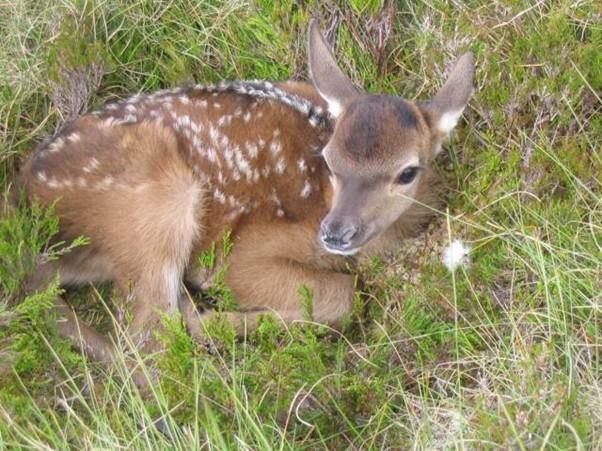
I stayed the night with Ned and Glenda in Aviemore and it was great to come back to a superb meal and a warm house, thanks Glenda. It was finished with a small dram and then watching the Ryder cup till late in the morning. What a result, one of the best viewing I have ever seen! The end to a great day. On the journey back next morning from a great night in Aviemore I was amazed to see 3 small roe deer all killed on the Granton – Forres road all about a few miles apart. When I left early on Saturday morning I spotted a few on the same road running from the road to the cover of the trees, you have to drive carefully especially on the more rural roads to give the animals a chance. Worth remembering? The drive was lovely with the trees and hills changing colour, the Spey valley is a grand place but no snow on the Cairngorms yet.
It is a lovely time of year, with the daylight shortening but the light can so interesting. Next weekend off to Torridon in the North West with “Fireman Ryan” local hero of Torridon MRT and a relative of the Lancaster crash on Ben Eighe on the Triple Buttress. Ryan, myself and a few friends. We hope to take him up to the crash site in this wonderful corrie on Monday. What a great life!
Great bits of kit – The Buff at a reasonable price.
Posted on October 3, 2012 by heavywhalley.MBE
Great bits of kit for the hills and outdoors do not need to be expensive. I mentioned the Bothy bag a wee survival shelter and a few contacted me about them they are well worth carrying, light and at a reasonable price and may save your life one day. A great thing is that they can be seen from a long way off which is great if you need evacuated by helicopter. The other thing is they are in great colours, reds, yellow, orange and can be seen in the unlikely event of an accident.
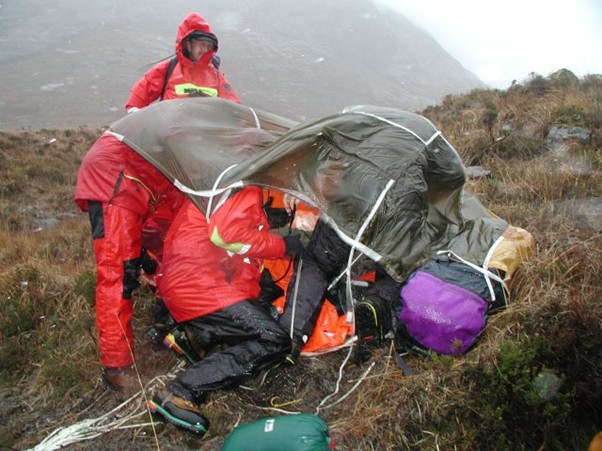
The Rescue services will tell you as the helicopter nears and sees you be aware that the shelter could blow away with the down draft and needs careful handling.. To many environmentalists they like the colours that blend blacks, green etc. If you have a problem on the hill and need help you need to be seen. Bright colours are the order of the day. Ask me how many times I asked a casualty from the rescue centre where I worked what they were wearing, they said blue or green! Not easy to see on a hill or moor! Be bright and be seen! Also the photos are far better in bright colours.


The buff comes in many colours, magic kit – so many uses for ageing hippy’s.
Worth remembering?
Another great piece of kit is the BUFF ORIGINAL BUFF®, a multifunctional tubular neckwarmer/headscarf/facemask/hat…. ideal for many activities. Original Buff® keeps you warm in the cold, wickmoisture and keeps you cool when it’s hot. The lightweight, breathable, moisture wicking fabric is wind resistant and extremely comfortable to wear.what a simple invention retails for about £13 upwards and has so many uses, see below: I have used them on many occasions even as a bandage on the hill. They are cheap, lightweight and should be in everyone’s kit list.

The Changing role of Mountain Rescue.
Posted on October 4, 2012 by heavywhalley.MBE
The sad search in Wales continues for the missing wee 5-year-old girl April who was playing with friends in the mid-Wales town of Machynlleth when she went missing. According to witnesses she was taken away in a van or a four-wheel drive vehicle and there were no apparent signs of a struggle. The search is now several days long and huge resources are being used by the Police. The Police will have their hands full and my thoughts are with them and pray they find April safe and well. The local Mountain Rescue teams and Search Dogs (SARDA) are heavily involved along with many other Agencies as the search enters its fifth day. The whole local community are working as one and my thoughts are with all these involved. I have been on several searches for missing children in the past and have been very fortunate that most turned up safe and well. The search for a young person, especially one so young means that all those involved will be pulling out all the stops. Mountain Rescue and SARDA are a key asset in any search nowadays within the UK about one-third of the incidents they are involved in are non – mountain. These involve from searching for missing vulnerable people, to assisting in floods relief and even train crashes in rural locations. It is great to see the expertise of Mountain Rescue Teams and their people being used to help the local communities in so many ways . Having a wonderful wee granddaughter and seeing at times how trusting young kids can be it is a terrible scenario for any parent. I can only feel the heart-break of April’s parents at this time. My thoughts are with them and all involved in the search.
The Boys Brigade 7th Ayr Centenary – past memories of hills, camps and football.
Posted on October 5, 2012 by heavywhalley.MBE
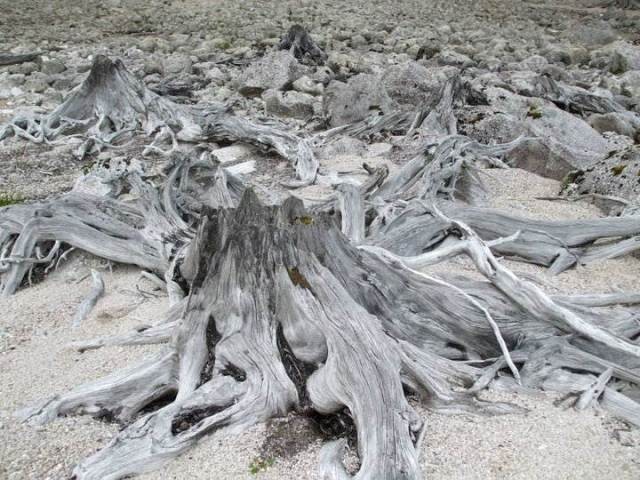
I just received an invitation to a Centenary Service of the 7th Ayr Boys Brigade where I was a member in my young days in Ayr. My Dad was a minister in the town and a well-known character, I was the rebellious Ministers son. As with most church organisations being the minister’s son was not so easy and I was a bit wild to say the least. The Boys Brigade was a bit military and I remember hating the marching, goodness knows how I managed 37 years in the military but I did enjoy the football, summer camps and the hill walking.
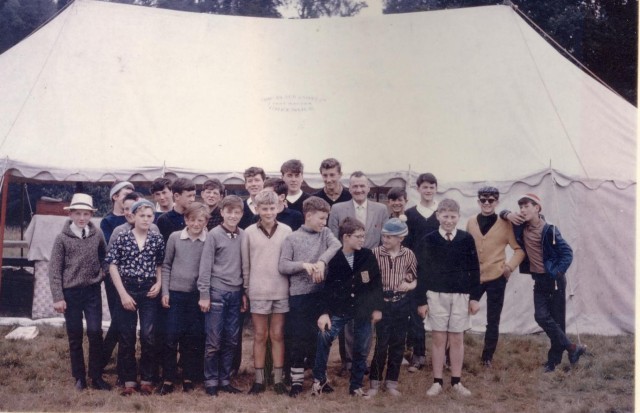
The football was wild, Patna, Tarbolton and Damellington names that still scare me to this day, playing football against some of the great in mining areas of Ayrshire. In those days the 60’s the whole village turned out to watch the games. They were hard games and no quarter was given or taken. I played in my National Health glasses so I got some stick. I already had a love of the hills spending lots of time with Dad, Mum and family on the Scottish mountains. I was taken to fill the hill party with the elder guys doing the Duke of Edinburgh Award as they needed 4 for safety and although only 12 at the time really enjoyed it. A skinny wee lad, if I remember rightly it was 50 miles in 3 days with huge packs. The older guys gave you the most kit to carry, (some things never changed) We spent lots of time in the wonderful Galloway hills, climbing all the big hills, like the Merrick and Corserine. These were hard days, usually in wild weather, but I did love it. Many nights were spent in tents and the Mountain bothies like Backhill of the Bush in Galloway. I have some great memories and though I for some reason never got my Duke of Edinburgh award? I managed all the expeditions and ended up spending a lifetime in the mountains. The rest was lost in the mist of time! I may try to get down to Ayr in November to celebrate the Boys Brigade anniversary in November and thanks all those who took the time to try to help me in my misguided youth!
I was lucky enough to be golfing yesterday in the “Moray Med” at my local course at Hopeman, we had a magic day. The weather was incredible with a special day and the whole of the coast shinning in sun. Morven a local hill was looking incredible across the Moray Firth looking like an extinct volcano.. We live in such a special place yet there are some evil people about. As usual we sorted the world out as we played golf. To hear grown men, all grandparents talk about the search down in Wales which now enters day 4 for the missing 5-year-old April. Our thoughts are again with the family, the Police and the searchers who must by now be exhausted. I pray that the wee soul is found soon and this awful story has a happy ending. Sometimes you wonder why these things happen and someone must have seen something. In this wonderful world even on such a beautiful day there are some evil people about and always will be. Give your kids a hug today, we never know what is round the corner.
The Ling Hut at Torridon and a great weather forecast – Deer knocking at the door!
Posted on October 6, 2012 by heavywhalley.MBE
I am away to Torridon on Sunday to meet up with Ryan from the Torridon Team and take a nephew of the Lancaster that crashed in the Triple Buttress of Beinn Eighe in 1951 to the crash site and memorial on one of the propellers that lies at the bottom of the gully. It will be a moving day. Also coming is a friend I used to work with in the ARCC who is a now a photographer Steve and Ned Kelly and Glenda his partner. We plan to stay in the Scottish Mountaineering Club Hut (SMC) The Ling Hut situated near the mighty Liathach and Beinn Eighe. It is an incredible place to be and will be a grand couple of days in one of my favourite places.
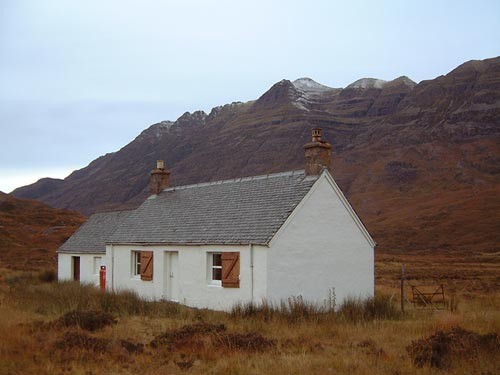
The hut was opened in 1955 in memory of the late William Norman Ling, the funds for equipment having been provided by a legacy bequeathed by him to the Club.
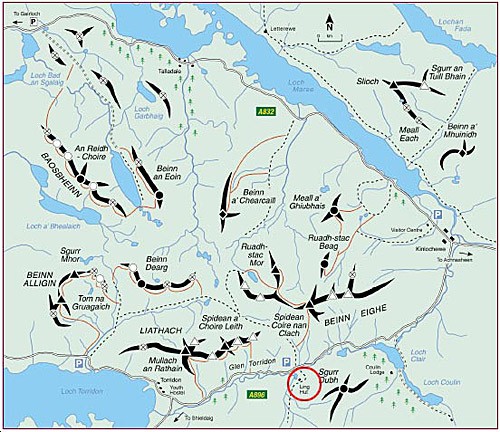
The hut is situated on the south side of Glen Torridon at G.R. NG 958 562. (See map below). There are restrictions on access to the Coulin Forest from mid August to the end of October (The MCofS website provides a Hill Phones section for more information on stalking). Ling is, like Lagangarbh, in Glencoe another traditional Highland house, though smaller, with no upstairs living space. It has just been re-furbished. There is a small loch outside reputedly stocked with fish, but surprisingly poaching is frowned upon by the estate!
The Stags should be roaring by now and it reminds me of a visit in 2007 when I was a member of the Torridon Mountain Rescue Team on a callout for walker who had broken their ankle on the coastal path near Diabeg. It was the usual rush in to help for about an hour with a stretcher and casualty bag to assist the walker. Apart from being a bit cold and sore it all went well and we got the Stornoway Coastguard helicopter to take her to hospital. The party with her were so well equipped and had done a great job but it was so cold that she was in danger of getting hypothermia despite the group having plenty of kit with them. Worth remembering. The icy path due to the cold temperatures was the culprit and many others had recently been caught out by the unique conditions. After the callout which went well I ended up back at the hut on my own as it was too late to go home a 3 hour trip. It was about midnight when I walked in the 15 minutes from the road to the hut. It was an incredible starlight night and the weather had been about – 15 for a week. The walk in was so impressive and the hut was shinning in the moonlight. All the peaks were clear in the glow of the moon and capped by a smattering of snow, everything was frozen solid. There was no none else there and I was soon asleep. After about an hour I awoke to a banging on the door and a bleary eyed man opened it to find a huge stag at the door rubbing the walls with its antlers. It was still very bright and a bit misty and I think it was scared-er than me and ran off.
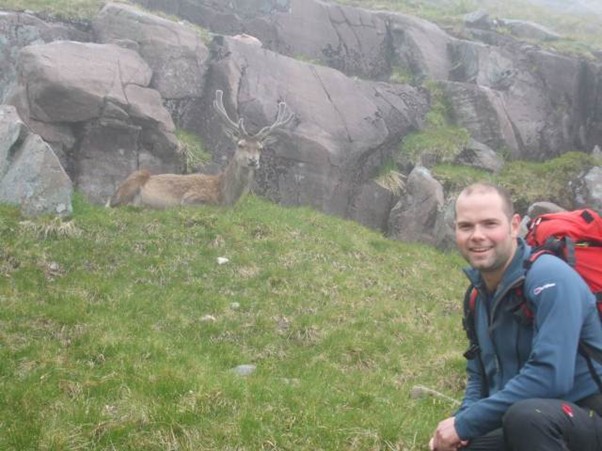
Young Ryan – local hero with his running mate “Staggy” on the hills near the Ling Hut!
What an experience, I always remember this meeting when I come to this beautiful spot. I hope we meet our friends the stags this weekend. The forecast is great so I cannot wait to get out to these the Torridon giants.
A look at the kit in 1951 on the Lancaster Beinn Eighe Callout.
Posted on October 7, 2012 by heavywhalley.MBE
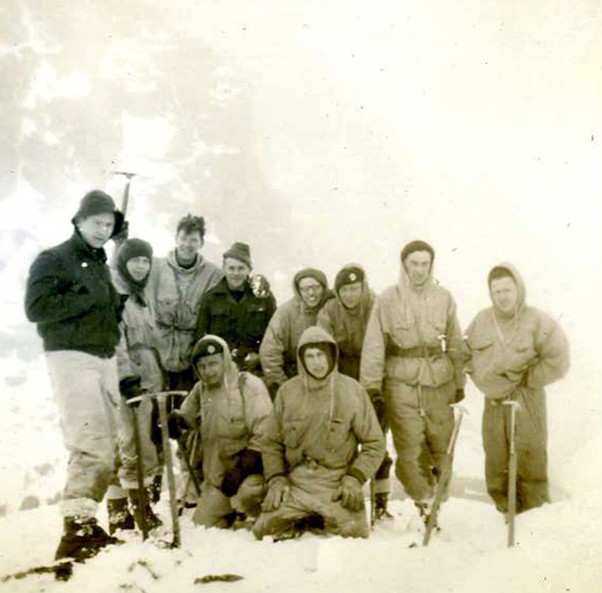
The photo above shows how basic the equipment was on the Beinn Eighe Callout in March 1951. A Lancaster aircraft from RAF Kinloss in Morayshire crashed in the Torridon Mountains in the then remote North West of Scotland. The photo above is courtesy of Joss Gosling who still lives in Fort William and was a member of the RAF Kinloss Mountain Rescue Team on the callout. Joss was then a very young man at the time and was one of the few who took photos during this incredible callout. These give you a unique insight into Rescue and mountaineering at this time. Scotland’s mountains in winter was a place for the very experienced and the RAF team struggled during this incident. They were short of experience, equipment and training to deal with such an incident. This incident had a huge effect on the RAF Mountain Rescue system and huge lessons were learned. Many locals assisted and highland ponies took the casualties of the hill. It is fitting that RAF teams now have a good relationship with the local Torridon Mountain Rescue Team and Ryan MacLean a prominent team member has organised this walk to the crash site tomorrow with a relative. Joss has never forgot the three months he was on this huge mountain recovering all the casualties and it had a massive effect on his life. If you ever get a chance to hear Joss talk about this episode of his life it is hugely interesting and deeply moving. The cliff where the aircraft crashed is called the Triple Buttress and much of the wreckage is on the mountain and in a gully now known as Fuselage Gully by climbers.
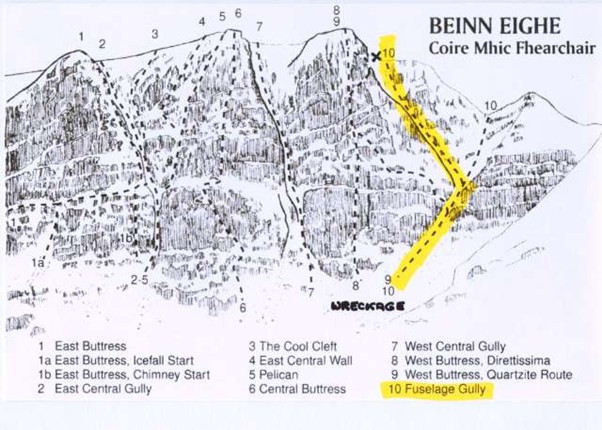
Joss has allowed me to copy a list of equipment he was issued with in 1951 – it is incredible to see how limited it is compared with today.
THE STANDARD ISSUE OF KIT IN THE 1950’s for RAF MRT as written by Joss Gosling a member of the RAF Kinloss Team in 1951 that went to the Beinn Eighe Crash
1 Bergen Framed Rucksack
2 Sleeping Bag
3 Pair of Boots Studded Soles, hard to break in
4 Woolen Sweater
5 Windproof Smock Very comfy to wear on the hill, a best friend
6 Windproof Trousers Not very useful
7 Oilskin Cape Beat you to death in strong winds
8 Oilskin Trousers
9 Oilskin sou’wester Hat
10 Balaclava Helmet
11 Sea Boot Stockings
12 Gaiters
13 Woollen Mittens
14 Khaki Battledress Top
15 Khaki Battledress Trousers
16 Beret
17 Whistle
18 Signal Flag
19 Electric Torch
20 Thermos Flask
21 Snow Goggles
22 Ice Axe Another best friend
23 Knife
24 Duffle Coat Used when traveling in the trucks.
25 Flying Boots Condemned for flying, Handy for us.
Crampons NOT ISSUED – two pairs hanging on the wall in the workshop, Ex commando and too big for any boots in the team. I ,Wonder where they ended up?
I had the very first pair of Vibram soled boots in the Kinloss team. Bought out of his hard-earned pay by mail order from a warehouse in Manchester – called Ellis Brighams.
Joss had the the privilege to be selected to attend the first Rock Climbing Course in North Wales ( Oct 15- 24 1951 ) with a colleague Junior Christie, It was led by Mike Mason and Johnny Lees and we climbed with nylon ropes. At Kinloss all we had were hemp/sisal ropes so again I was the first in the team to have a nylon rope, again purchased from Blacks of Greenock from his pay.

On Monday we hope to take a relation of the Navigator who like all the crew died in the crash to the crash site below the huge cliffs to visit this sombre place. Every time I visit this area I am so aware of those who gave so much and those who we learned do much from in the past. To be with Ryan one of the local Torridon Mountain Rescue Team will make it a special day. Joss is now finding it a wee bit hard going on the hills and will not accompany us this time but will be eager to hear how we got on. We will all be thinking of him and the other team members on that sad event all these years ago.
Beinn Eighe Poem and tribute.
Posted on October 8, 2012 by heavywhalley.MBE
I will be away till Monday so will try to post this when I am away in Torridon!
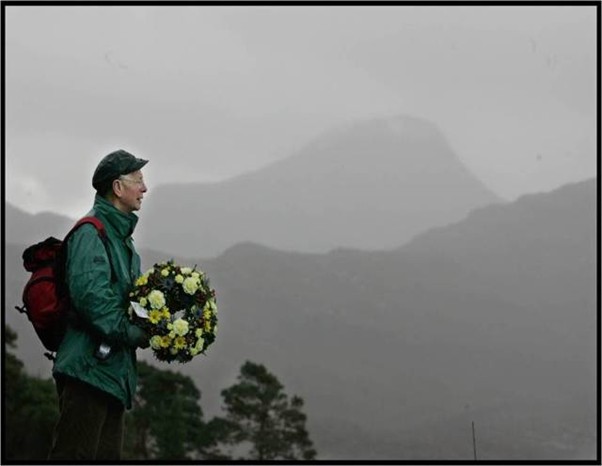
Joss Gosling veteran rescuer of the Beinn Eighe Callout in 1951 with a wreath on the anniversary of the crash. A wonderful humble and unassuming man. We follow in the footsteps of some great people, we must never forget this.
Beinn Eighe “The Triple Buttress”
Unseen from the road. Majestic cliffs are hidden by ridges and wild corries.
A long walk in, views expand as we climb.
Liathach, brooding watches our progress from afar.
A familiar family of deer by the boulders,
They have been there for many years and are friends.What have they seen?
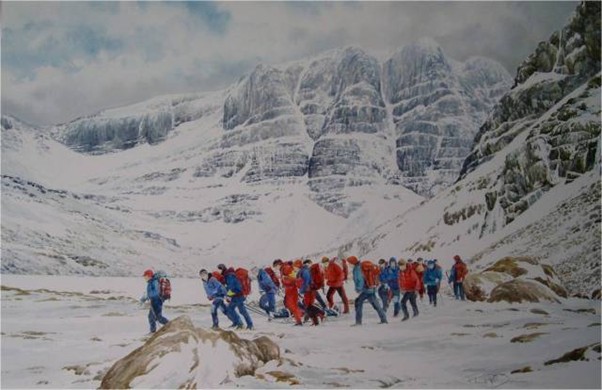
The views of moor and lochans,Waterfalls sparkle in the sun.
At last, the lochan.
Then Cathedral like, great cliffs glisten in the snow.
Time and weather sculptured, wreckage glints in the sun.
This is a wonderful poignant place.
This Torridonian giant
Beinn Eighe.
Heavy Whalley March 2011
Ben Eighe Lancaster crash and a visit with a relative.
Posted on October 9, 2012 by heavywhalley.MBE
The last two-days I spent in Torridon on the North West of Scotland. Ryan one of the Torridon Mountain Rescue Team had kindly asked me to accompany Jeff a relative of one of the crew of the Lancaster who died on the mountain in 1951, he was the navigator Flying Officer R Strong. Due to recent bereavement Jeff had just uncovered the story of the crash and wanted to visit the site. We met Jeff in the Torridon Hotel on Sunday night after the most incredible journey to Torridon, the weather was incredible. All the hills were clear and it was a stunning day. We had decided to stay at the Ling Mountaineering hut but due to it being a bit busy stayed with Ryan in his incredible house below the mighty Liathach one of the Torridon mountain giants. The view from the house is of this amazing hill, its cliffs, gullies and crags and the Stags were roaring all the time, incredible. Jeff was looking forward to the walk and had some information on his Uncle who he never met. It was very interesting and it is amazing to hear some of the life of his Uncle, sometimes we forget that this is not just a piece of history or another crash site on Beinn Eighe. We sometimes forget that real people were killed and all have incredible stories and how it effected the family even to this day over 60 years ago.
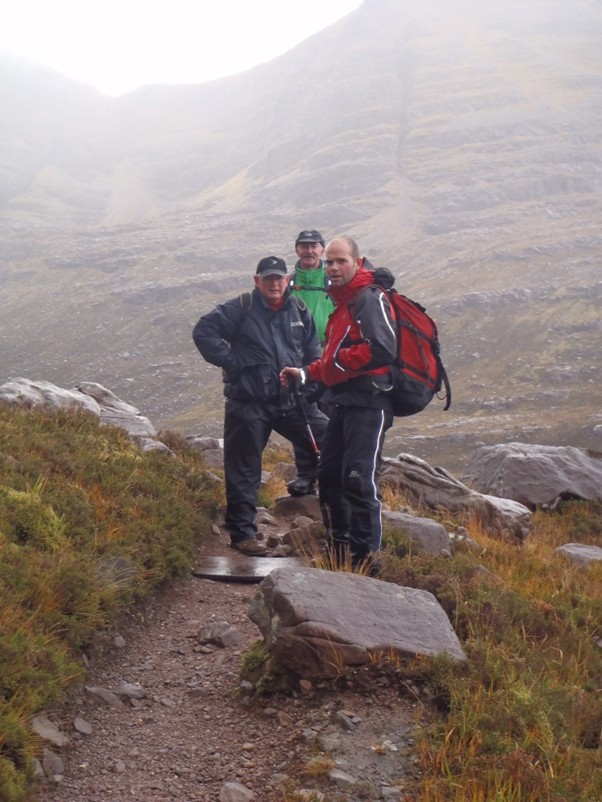
The weather did not hold and we had a very wet start with drizzle most of the morning. The hill party was Steve ex RAF helicopter pilot, Ian Ex RAF MRT, Glenda, myself and Ryan and of course Jeff. To many walkers it is no problem to walk into the Triple buttress but today we took our time and enjoyed the varying views. Mist was coming and going, great cliffs, familiar climbs, epics rescues and “tales of brave deeds” in the air were retold and embellished. We regularly stopped and Jeff was feeling it and working hard. As we got near where we usually meet a family of deer, as to order they were there! I took this opportunity to have a break and try out my wee poem on Geoff and the rest of the party!
Beinn Eighe “The Triple Buttress”
Unseen from the road. Majestic cliffs are hidden by ridges and wild corries.
A long walk in, views expand as we climb, Liathach, brooding watches our progress from afar.
A familiar family of deer by the boulders. They have been there for many years and are friends. What have they seen?
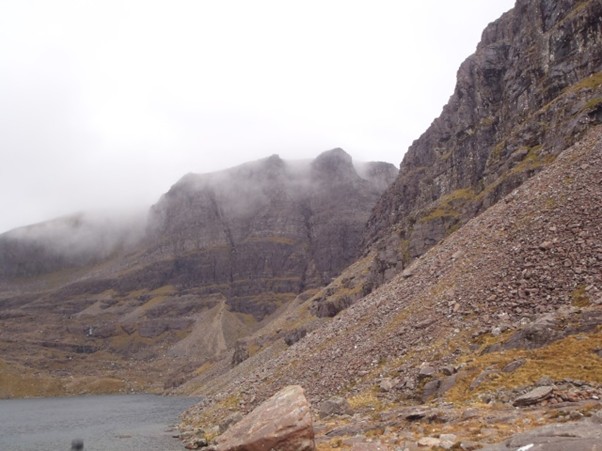
We soon reached the wee waterfall and then comes the stairway to heaven, you reach the huge slabs and then the view. The incredible Triple Buttress Of Beinn Eighe one of the most impressive places in Scotland. Yesterday the mist was blowing across the cliffs and the Stags were roaring all over the corrie. This is a cathedral to nature a powerful place to be it always impresses me no matter how many times, I visit. We must keep such places as nature has made it.
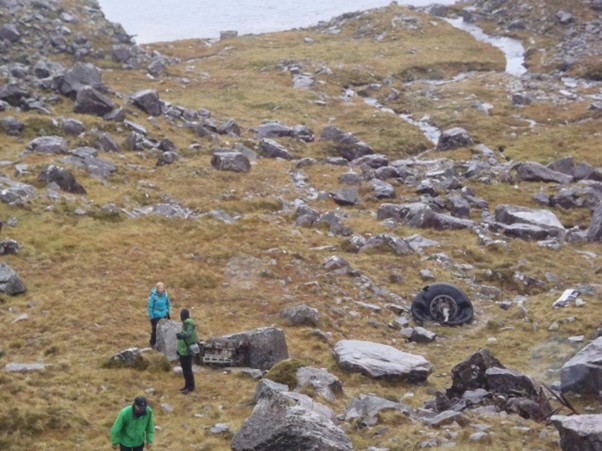
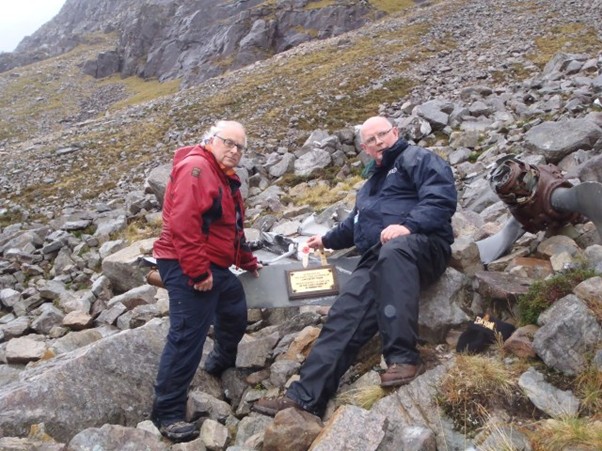
From the loch and lunch we walked along the loch and soon we could see wreckage. We reached the crash site showing Jeff the wreckage from the distance, it is such a moving place to be we could all feel the atmosphere. Though he was very tired Geoff was in awe of his surroundings and we all felt very emotional. The mist, the views and the Stags still roaring what a place to be. As we wandered up by the wreckage, first an engine, then a tyre, wreckage was everywhere. Geoff was stopping and looking as we all did, no matter how often I visit this site I always feel the power of what happened. Eventually we reached the propeller with the small memorial put there in 2001 on the 50th anniversary by RAF Kinloss MRT. On the 60th anniversary it took nearly 5 hours to walk in deep snow, that was how the weather was on the crash all these years ago. Jeff was moved by what he saw and we said a few words and laid the wee cross at the site in memory of these young men. I finished my poem to a background of the stags it was an incredible place to be.
The views of moor and lochans, waterfalls sparkle in the sun.
At last, the lochan, then Cathedral like,
Great cliffs glisten in the snow.Time and weather sculptured,
Wreckage glints in the sun. This is a wonderful poignant place.
This Torridonian giant, Beinn Eighe.
Heavy Whalley March 2011
It was a long pull back but all downhill, the views ever-changing with the lochans glistening in the sun, then the rain came again. The vastness of this area is incredible, the views ever-changing. Just as we got near the main path a huge stag was 30 feet away. It looked at us then raked the heather with its antlers, all power and brute force. We all watched spell-bound then it was gone, a magical moment that one never tires off. A long day then back to the wagon and though soaked what a day. Jeff was very tired but happy and we managed a wee drink back at the Torridon Hotel. Jeff and his wife then brought out some mementoes of his Uncle, a letter to Jeff’s Mum, a Christmas card, a small photos and a few other stories. It brought a great end to the day and we had to get going as time was moving on. It had been a great day, hugely moving and another insight into a another world. Add to this the wildness, the grandeur of this place and of course the company, what a day we experienced.
Thanks to Torridon Mountain Rescue Team. Ryan, Steve Ian ,Glenda and Jeff. Also to Joss Gosling one of the RAF Kinloss Mountain Rescue Team on the callout in March 1951. ” Lest we forget”
2 Responses to Ben Eighe Lancaster crash and a visit with a relative.
Heavy, You may not have heard of the Slesse Air Crash in 1956. It was a commercial flight from Vancouver to Edmonton which hit the east face of the mountain killing all 62 aboard. The amazing thing was that the wreckage was not found for several months even though it was only 100km from Vcr.
I did an early ascent of its NE Butress in 1977 and again in 1988 with my son aged 15. Like your Scotland an amazing place.
Hope the link works if not SLESSE AIR DISASTER should work. Dick
http://en.wikipedia.org/wiki/Slesse_Mountain
- heavywhalley says:
Thanks for that Dick – interesting and very sad only a few years after Ben Eighe in 1951 – Hope you are well. Regards Heavy
Nature in Torridon – Poachers Fall Liathach!
Posted on October 10, 2012 by heavywhalley.MBE
When you come back from a few days away you take a bit of time to think about what you have seen. It used to be the summits and the climbs that mattered, chasing ticks in books and hills, Munros, Corbetts etc. It is great as you get older how much more you appreciate the other parts of the wild land. I notice so much now that I missed when I was rushing around in my youth! It was fun though!
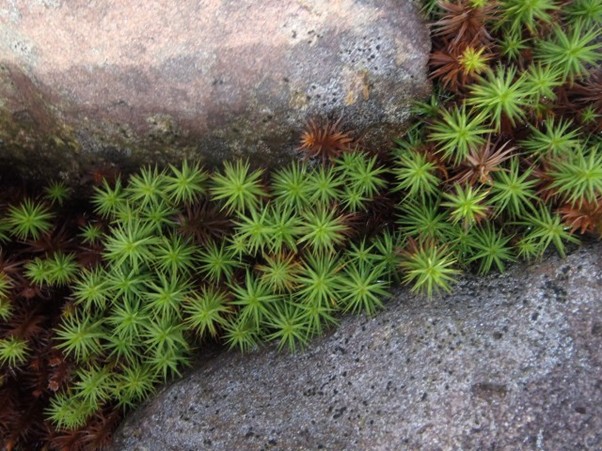
As we walked the short distance to the Ling hut at Torridon we passed a wee loch and the trout were jumping after flies; they were fair flying about, big fish, an incredible sight. The estate frowns on poaching! The backdrop was incredible, with Liathach mirrored in the loch a special sight. We take this for granted, the climbing on rock and ice is incredible here with the majestic Celtic boulders a few miles down the road, and the beautiful climbs on Seanna Mheallan hardly climbed on, we live the dream. There are lines all over the cliffs winding their way to the summits; you can never walk the same way if you enjoy adventure. Add snow and ice, and the place is transformed, and the names of the cliffs and climbs take you into the minds of the climber, Pyramid buttress, Brainless falls, etc! What minds climbers have
I mentioned yesterday the Stags and the noise on the hills, what a noise, it happens every year at the rut. There were so many huge stags bellowing and making that incredible noise at times echoing round the corries. When you stop, as we did on the hill, often it was so loud with the Stags reminding each other who was in charge. Add to this the colour of the heather and bracken, now a wonderful brown rustic colour, at this time of year, and you have a special season. When the light that is ever-changing hits the bracken, it looks like “flame grass”, a new word that I heard for the first time yesterday. The rain and mist swept in most of the day, and the buttress showed new lines as the waterfall formed on the huge cliffs, showing possible new lines for the ice climber when winter comes. On a wet day, you can spy some new lines!
As I mentioned before, we have many rescues on both sides of this wonderful glen, Alt Corrie Dubh Mhor. Many happy, many sad, it is a long walk in on a winter’s night and can take at least 2 hours to reach the Corries at least on a bad night. It is not just walkers or climbers that get injured, and at times the Mountain Rescue Teams can have an epic. I was the team leader when my friend and Deputy Team Leader at RAF Kinloss Mountain Rescue Team fell on one of the classic climbs Poachers Fall (what a name), a 180 metre 4-star grade 5 winter ice climb. Kenny fell near the top pitch and was left hanging below the belayer. Before he set off to climb the last pitch, he mentioned that the belay was a bit over the top. Andy had put in about 4 ice screws as he was unsure of their quality. Both had been in Canada a few weeks climbing the great ice out there. Scotland can be so different, with the ice ever-changing in quality and quantity. Kenny was very lucky as most of the belay collapsed with the force of his fall and both belayer and climber were in the end held by one – ice screw. Kenny then managed to climb, get pulled back to the belay despite wrecking both ankles. He is a hardy man. I got a scrambled message and was on a new route in the adjacent corrie. It was an awful part of the job as it was your own guys that were having an epic. We had teams all over climbing, and a party managed to get a party who were on another route nearby above them, not an easy task. After an epic, we managed to get Rescue 137, the Seaking helicopter from RAF Lossiemouth, to pluck them off the hill in the only small weather window available. It was incredible flying and would have been a nightmare rescue in the weather that changed so dramatically. God was with us, and we were all so lucky that it was not a tragedy we were dealing with. In life, things can happen, and luck can play a huge part, but always if possible back up a belay, you never know, no matter how good you are, it can all go wrong. Worth remembering?
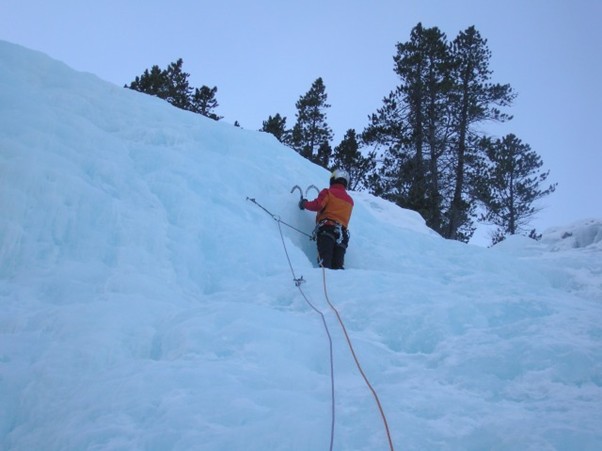
I visited Kenny is hospital at Raigmore in the “climbers ward” next day, he was a lucky man and was soon back climbing a few months later. A bit wiser but they make them hard in Yorkshire.
My pal Joss told me he scraped ice off the car yesterday and it was -4 in Braemar last night, temperatures are dropping winter may be coming?
Heavy Rain – swollen streams and flooding
Posted on October 12, 2012 by heavywhalley.MBE
Today’s forecast for the Cairngorms is not so good, so my wee trip out is cancelled also the hill I wanted to climb has stalking on so it will be a visit to see friends in Aviemore. The weather stated “Incessant rain; may ease toward south! Incessant rain Monadhliath, Lochnagar, and particularly the Cairngorms where the rain often heavy. The rain may begin to ease south of Deeside and Newtonmore in the afternoon. Very wet underfoot, especially south of Deeside and increasingly Cairngorms”
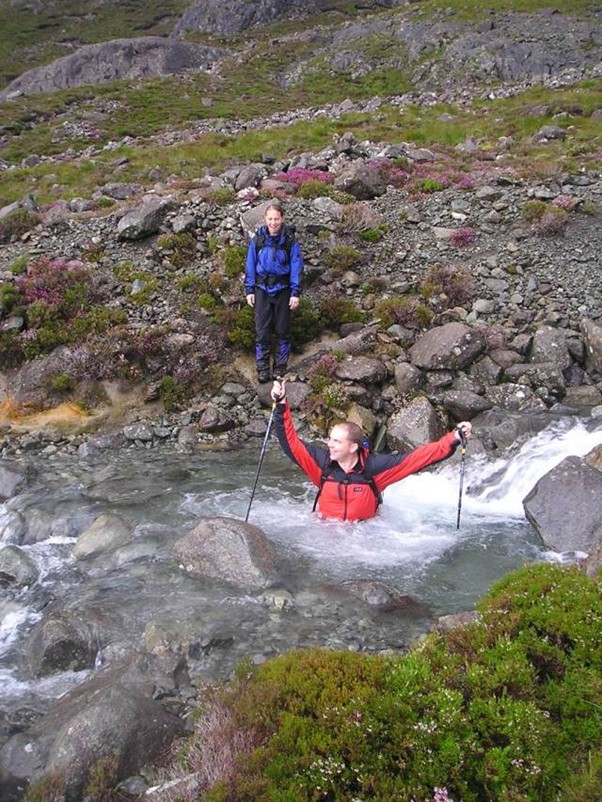
Nearly every mountaineer is faced with potentially hazardous rivers crossings at some time. The more remote the area the less chance of bridges across the rivers. Unless they are in spate mountain rivers do not present serious situation but when faced with a difficult crossing the golden rule is not to attempt it unless it is essential that you do. Lots of rain , means high rivers and in the mountains these can be very dangerous. Always use bridges whenever possible. They should never be underestimated. Nearly every year someone has a problem with a river in the mountains. A flash flood can cause some big problems and I have in the past walked well upstream sometimes for several miles to cross as the river was impossible lower down. On my big walks across Scotland we had a few epics, especially in the Fannichs trying to cross to Fionn Beinn from the old Nest bothy.The river was huge and we were very lucky. Also at Sheneval I had a real problem trying to get back to the bothy after a big hill day. It was late at night and the river was very high, lucky my dog found the shallow bit but I still had to swim a bit. It was very serious and I learned a lot from these early days. At times it is better to wait till the flood subsides if possible. All walkers should familiarise themselves of using a rope effectively and the best places to make crossings.
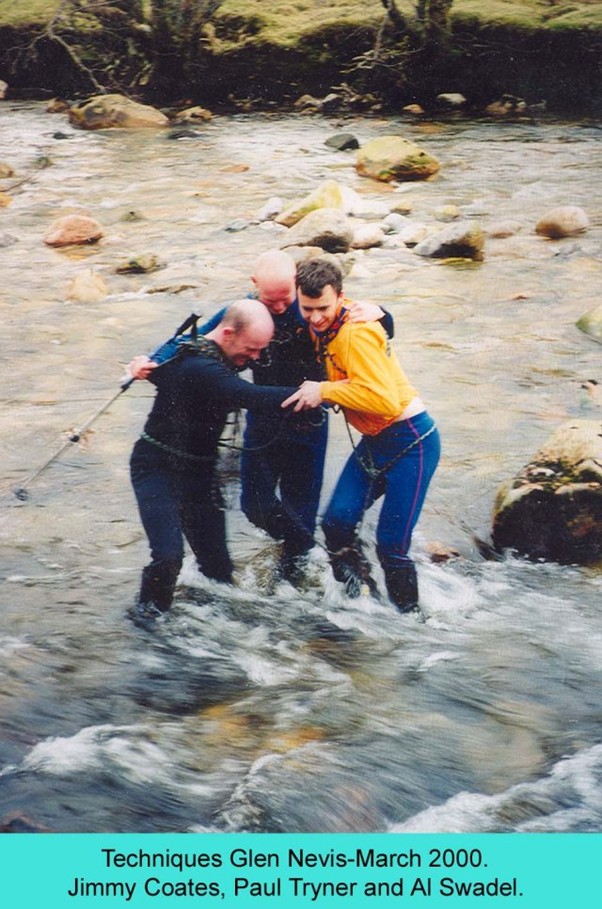
The question is should we cross, if in doubt stay out! Worth remembering!
- Where do we cross? The choice of the safest place to cross is vital. Try to view the river from a high bank. You may be able to see gravel spits or sandbanks just below the surface and get some idea of the depth and position of channels.
- How do we cross? Use mutual support methods. The more people in the party, the more strength there is for crossing and for supporting anyone who slips or falls. All river-crossing methods have their advantages and disadvantages and, in difficult conditions, no method is absolutely safe.
Scottish Mountain Trust
Posted on October 13, 2012 by heavywhalley.MBE
I had an interesting drive yesterday going to the Raeburn Hut near Laggan for a meeting for the The Scottish Mountain Trust (SMT) . This hut was newly constructed in 1988 and named after Harold Raeburn who joined the Club in 1896 and was an outstanding early influence on Scottish mountaineering.
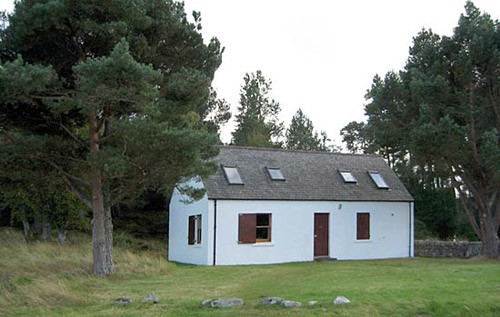
The flooding was really bad and I stopped to visit friends at Aviemore and had a coffee at the Boat a pub by the river in Aviemore. The river was huge and we just missed some open canoeists on the swollen river who had just come out the water. The river was brown and full of debris and in real spate, the rain was torrential Incredible people still out doing things despite the weather! Even worse was the flooding in the Spey Valley by Newtonmore it was getting too dark to get a photos but incredible how all the fields become a loch so quickly. Everyone made it safely to the Meeting as all the Trustees travel from far and wide for the 6 monthly meeting. It was pitch dark when I arrived and by 2200 the Meeting was over and it was back up the A9, The rain still crashing down and the sad result of the Scotland / Wales game to break my journey home. The SMT does a lot of good work and it is worth I feel letting the mountaineering world know what it does!
The Scottish Mountaineering Trust – What is the Scottish Mountaineering Trust
The SMT is a grant-making Charity which, founded in 1962, has for nearly 50 years been helping people enjoy and appreciate mountains and mountain environments both in Scotland and throughout the world.
How is it funded? All profits from the sale of Scottish Mountaineering Club climbing and hill walking guides go to the Trust, and provide much of the Trust’s revenue. The best known guidebook is The Munros, first published in 1986. Other revenue comes from legacies and donations from individuals and organisations.
Grants are wide-ranging and always associated with mountains e.g. their geography, topography, meteorology, biology and geology, or the safety of people enjoying them. Mountain expeditions can be assisted provided a clear scientific or other project beneficial to the general community can be demonstrated. Purely recreational pursuits are excluded.
Who can apply?
The Trust tries to get the most from its grants. It is commonly, though not exclusively, groups or organisations which benefit. New ideas or causes are always welcome, as long as the hills or hill users benefit.
The following are the approximate totals of grants made by the Trust in its major areas of
activity in the 20-year period 1990-2009.
Footpath construction & maintenance £317,318
Core funding for the Mountaineering Council of Scotland £136,475
Land purchase £68,500
Mountaineering education & training £23,000
Mountain rescue equipment and facilities £56,000
Support to expeditions £23,000
Renovation of Club Huts £143,000
Total £767,293
Interest free loans may occasionally be offered.
1947 First Aid Committee – The start of Mountain Rescue being more formalized in Scotland.
Posted on October 14, 2012 by heavywhalley.MBE
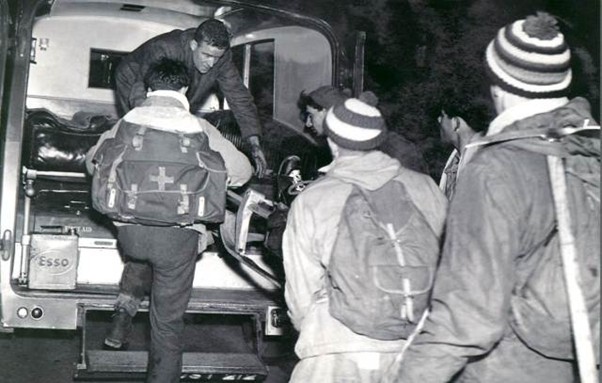
Many people take for granted that Mountain Rescue is so organised nowadays. There are teams in every area and the recent Hebrides SAR team has filled a gap. In the early days it was locals and climbing clubs that bore the responsibly for Rescue in Scotland. Great things were done in these early days. It was decided that equipment a stretchers, first aid equipment would be left in key areas with responsible people, usually with the Police or in climbing huts for use on rescue. The RAF teams had sub units usually in Police stations as well supplementing the equipment already in use. This was still being used when I joined Mountain Rescue in the 70’s and I enjoyed a few days out on checks of the kit, to Skye and up in North West.
I located some notes from the First Aid Committee in 1947 when they were setting up equipment to assist in Rescues.
Report from Convener of First-aid Committee.
Finance. – The past year has seen a considerable increase in the provision of equipment. It will be remembered that in the previous year the Committee decided to support an appeal for funds issued by the F.A.C. of M.C.,
The First Aid Committee of Mountaineering Clubs and not only contributed £50 but sent on the appeal to other Scottish Clubs. A total of over £350 was raised, of which some £80 was contributed by Scottish Clubs. Since then new Stretcher Posts have been equipped at a cost of over £200 and further equipment is ready for Arran as soon as arrangements are made for housing it.The F.A.C. of M.C. has not yet called for annual subscriptions, but one or two Clubs do contribute annually. (Alpine Club and Climbers’ Club give £5. 5s. each per year.) Does the Committee consider the S.M.C. should once more give a lead to Scottish Clubs by voting a small annual contribution ?
Stretcher Posts. – Equipment in Scotland is now as follows:–
Skye: Glenbrittle Thomas stretcher and complete equipment
S.M.C. -Sligachan Do. S.M.C.
Fort William: Marshall & Pearson’s Garage -Do. Dr Duff, Belford HospitalBen Nevis: The CIC Hut Do. S.M.C Glencoe: Clachaig Do. S.M.C.
Crianlarich: Police Station Do. Lomond M.C.
Arrochar: Police Station Do. Creagh Dhu M.C.
Arran: Brodick Police (Not yet equipped) Lomond M.C.
Aviemore: Coylumbridge (Mr Grant) -Duff stretcher and complete equipment -Moray M.C.
Braemar Lui Beg Thomas stretcher and complete equipment
Grampian – Police Station Duff stretcher and complete equipment
Cairngorm – Spittal of Muick: Mr Robertson Thomas stretcher and complete equipment
Cairngorm
Co-operation of Clubs. – The formation of a joint committee of Scottish Clubs has helped to bring forward enthusiastic helpers so that supervision of the Stretcher Posts can be divided amongst the Clubs according to districts most frequented by them. The Clubs are also cooperating with regard to “Notices to Hill Walkers” and provision of personnel for rescue parties.
Publication. – Comment should be made on “Climbing in Britain,” edited by Barford. This shilling “Pelican” includes a list of Stretcher Posts in Britain, with helpful notes regarding evacuation. Incredible days
Mountaineering Clubs form Mountain Rescue Committee in 1947.
Posted on October 15, 2012 by heavywhalley.MBE
We take so much for granted but little do we know how much we owe the climbing clubs for the early formation of Mountain Rescue. As I said in the early days much was done by the local people in mountaineering areas and the Scottish Mountaineering Club who would send club members to assist on big rescues from Glasgow and Edinburgh. One can only imagine the time involved in getting searchers available and due to the roads getting them to the area where the casualty was? There we few phones in these days and I remember Hamish telling me how hard it was to get a public phone put in Glencoe in the early days. We are so lucky nowadays with mobile phones, well trained teams and better kit, yet we still have accidents. The following is a few more notes from early meetings that lead to the Scottish Mountain Rescue Committee.
Report from Convener of First-aid Committee. With the equipping of a Stretcher Post at Brodick, Arran (at the Police Station), under the supervision of the Lomond Mountaineering Club, the number of fully equipped Posts in Scotland becomes twelve. Complete details of these, and Stretcher Posts in England and Wales, with advice regarding accidents, of which every climber should avail himself, are obtainable in a reprint from Barford’s “Climbing in Britain,” at a cost of 3d. each, plus postage. Mountain Safety was on the early agendas and pamphlets were printed giving advice! Also the BBC were asked to do their bit, this was 1947.
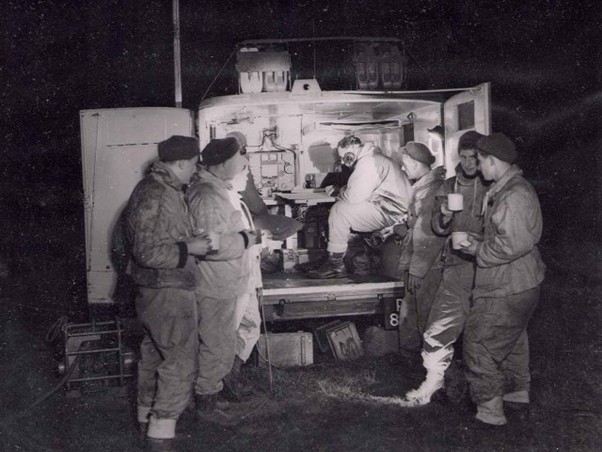
One of the rucksacks, but not the contents, used on Bidean nam Bian during a rescue in December 1946 was lost in wind and darkness. If it should be discovered it should be returned to Clachaig Inn. The First-aid Committee of Mountaineering Clubs, on which we are represented by Dr G. G. Macphee, has changed its name to the Mountain Rescue Committee of Great Britain.The B.B.C. have been good enough to co-operate with us in our attempts to reduce the number of accidents on the hills. Not only did they allow the Hon. President to give a warning talk at Easter, but they incorporated warning passages in the script of a series of dramatic broadcasts arranged by Mr Borthwick.
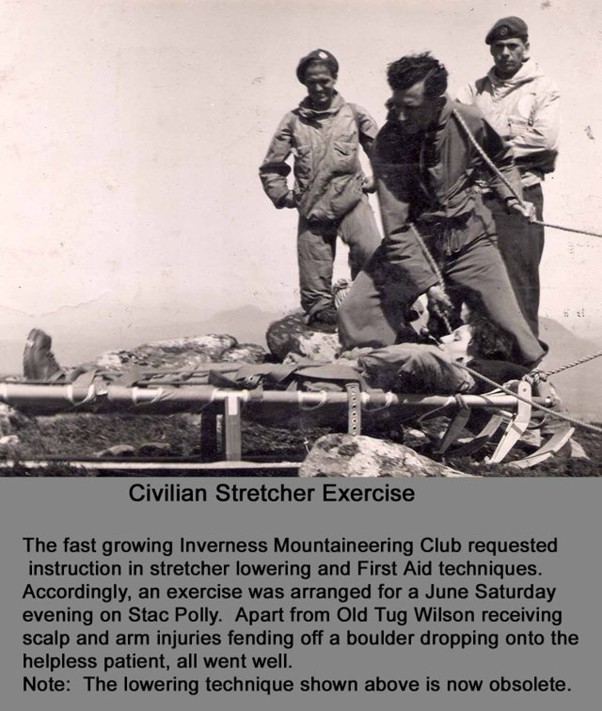
Association of Scottish Climbing Clubs At the Meeting held in Dundee on 8th November 1947 eight Clubs were represented, with Mr Harrison in the Chair. The Glasgow UniversityM.C. was admitted to membership.
Rescue Schemes. – Aberdeen and Dundee schemes were reported to be in working order. Discussion took place on transport difficulties (already discussed on 2 7th October by a Meeting of West of Scotland Clubs). It was decided to ask Clubs to issue an appeal to their members for contributions in order to establish an Emergency Fund to be held by the A.S.C.C. for this purpose, the fund to be supervised by the Treasurer of the Lomond M.C. It was agreed to apply to First Aid Committee with a view to establishing a stretcher post at Altnafeadh, Glencoe.
Footnote – Hill accidents 1947
Hill accidents reported during the year 1947 amounted to 17, involving 8 deaths and injuries to 5. Two persons are still missing. The rucksack lost on Bidean has been replaced by a new one at Clachaig Inn.
2011 – nearly 450 incidents! – Times have changed!
Ben Nevis footpath. Money found for footpath repairs on Ben Nevis!
Posted on October 17, 2012 by heavywhalley.MBE
I received a comment from the Nevis Partnership due to the fact that the group I was with took a large bag of rubbish off Ben Nevis despite the wild weather. The rubbish on the hill was awful, plastic bottles, sandwich wrappers and rubbish everywhere. The mountain has continual pressure especially from large Charity groups who are using the mountain as part of the Three Peaks Challenge. To see so many out in the hills enjoying the outdoor experience is a great joy to me, and many get their first taste of mountains on such a challenge. Many look after the mountain and are careful, but so many use and abuse it, leaving a trail of rubbish wherever they go. Mountaineers can be very elitist and protective of Britain’s highest mountain but we must look after all our hills and educate those who go out for the first time to “take nothing but photos and leave nothing but footprints” The mountain path is there for all to use and we should all work together, it is not a “gymnasium for egos or a place to dump your rubbish!” All have a right to use the mountain, but we must look after it and treasure this place.
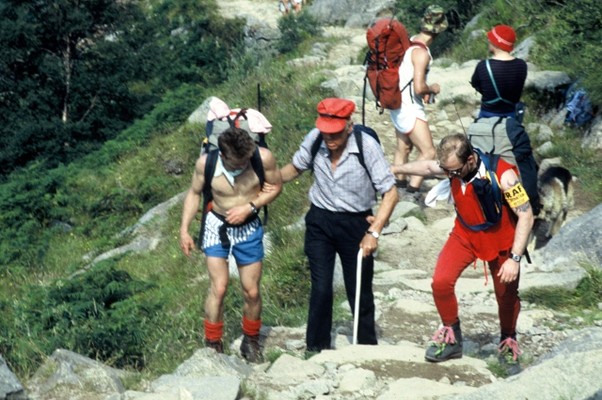
Taking some blind war veterans up the Ben Nevis Tourist path, a long 12 hour day. A very humbling experience for all involved. The mountain path is still a great achievement for many and the area has a huge footfall. The path is in constant use, and thanks to all who work and support the path, keep it maintained and help keep the mountain safe and tidy. We can all do our bit! Maybe the large groups that use the mountain and make money out of it should donate to the upkeep of this great area?.
The Nevis Partnership are in line to get a £4 million funding package for the Ben and Glen Nevis area. The Nevis Landscape Partnership will be formed by adding to the existing Nevis Partnership group. There will be an exciting range of projects funded, including archaeological experiments to find out how ‘vitrified forts’ were made, excavations of Dun Deardail hilltop fort in Glen Nevis, and a variety of wildlife conservation projects involving locals and volunteers and West Highland College.
Funding will be partly provided by the Heritage Lottery Fund, with the Nevis Partnership needing to draw up detailed plans in the next 16 months to qualify for the money. So exciting times for Ben and Glen Nevis and the Friends of Nevis look forward to working with the Nevis Partnership and finding out more about their exciting plans.
http://www.bbc.co.uk/news/uk-scotland-highlands-islands-19960999
Paths on and around Ben Nevis are to be improved as part of a new effort to protect the UK’s highest mountain.
Money from a £4m funding package announced in the summer will be used to pay for repairs to the lower sections of the main route to the summit.
Some cash will also be spent on expanding a paths network in Glen Nevis.
Ben Nevis Charity – rulebook?
Posted on October 18, 2012 by heavywhalley.MBE
My wee piece on the Blog yesterday got a few comments about the state of the Ben Nevis path, especially with litter from large groups. Charity groups use the Ben to raise vast sums for very worthwhile causes, but as I stated before, the mess that is left not just by the walkers but by all who use or, at times, abuse the mountain. I have a lot of friends, including myself , who at times have worked for Charity groups assisting walkers up the hill. It is an essential part of the safety involved in taking large groups on the hill. Though not well paid, it provides an income for some in the outdoor world where times can be hard, especially in a recession. An average day on the Ben can take anything from 6 – 8 hours to complete, especially with a large group. If you add in a briefing before the day and at the end, and maybe a drive it can be a long day for just over the minimum wage. Few who work in this industry can afford to speak out for fear of losing valuable work; it is an interesting problem. Many of the local hotels rely on this trade in the late season, and it is a profitable business. Many on the 3 peaks rush up the hill and drive off on the quest to start or finish the hills. All these are wonderful things and raise millions for great causes, but how many give back to the area? Some may say such is life, and some companies pay well but some may be making big profits out of these events? What is the answer? education for the walkers who take part and maybe support for the groups who try to look after the Ben and support path repair. Few will speak out, maybe it’s time for someone or some organisation to take the lead. Rules and legislation is not what I want for the mountains, that is why we love the wild land. Maybe I have it all wrong again, but something needs to be done. What would John Muir have said? Is what is happening on the Ben any worse than exploiting the land in other ways?
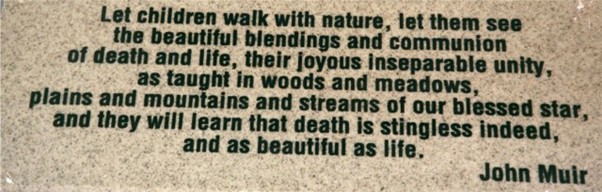
The Ben is not the only place that suffers from rubbish being dumped in the hills. In the past I was very lucky that at the end of winter we would manage a training run with the RAF Helicopter at RAF Leuchars and go around a few of the Mountain Bothies. The rubbish of all types was incredible that we collected and unfortunately Health and Safety stopped us many years ago! It is so sad what we do to the wild and how we must work together to look after what we have. We take so much from the wild places please give something back.
“Resemble not the snail, who with his filth marks his trail.
Let it be said “where you have been you left the face of nature clean”
Randolph’s Leap – River Findhorn
Carn Lochan Cairngorms a Moray Mountaineering Club view?
Posted on October 19, 2012 by heavywhalley.MBE
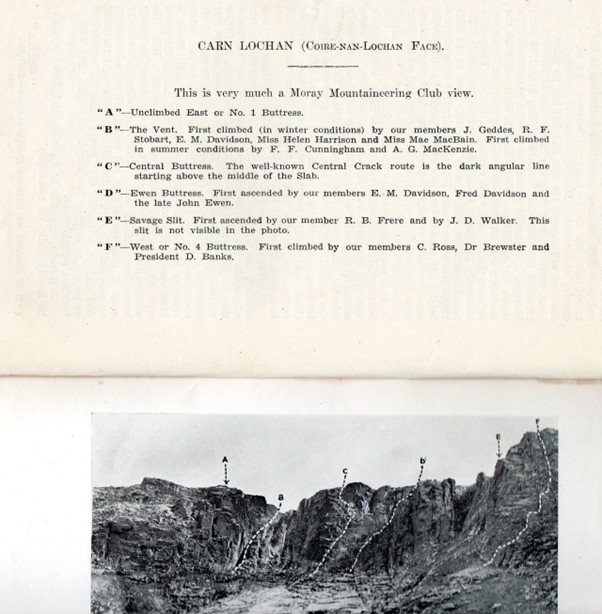
Cairn Lochan (Coire Nan Lochan Face ) Cairngorms taken from the Moray Mountaineering Club Journal of 1950 – The photo has the note this is very much a Moray Mountaineering Club View!
On my research for the Moray Mountaineering Club (MMC) 70th Anniversary dinner I gave a chat on the club history over the years, I was given 3 old Journals written by the club many years ago. What a great wealth of mountaineering in these old Journals. This 1950 Journal was the first issued for 14 years, the effect of the war all playing a part. The Club had 100 members in this period and is still flourishing today! Few know that the famous Coire nan Lochan picture above had many of the first ascents by the MMC members. There are some grand articles in the journal with an ascent of North East Buttress on the Ben , a new route on Beinn Eighe,various new winter climbs, a trip to Canada and of course lots about Scotland, a welcome to the newly formed Inverness Mountaineering Club and the regret that one of the club members was killed on Sullivan in 1949.
Club meets both bus and weekend were fairly well attended and the July meet was spent taking materials into the Corrour bothy with the Cairngorm Club! The plan is to digitalise the old Journals we have (well done, Andy) so all can see them. He is going to put them on the moraymc.wordpress.com. If anyone has any more, it would be great to see them. Once they are on the website, they will be there forever and saved for posterity. moraymc.wordpress.com

I am off to Loch Quoich with the club this weekend, the forecast looks great so I am looking forward to a great day on the hills. Get out there and have fun!
I am available for After dinner speaking especially to Mountaineering Clubs at a reasonable rate!
More on Coire an Lochan in the Cairngorms – The Vent first ascent 1935.
Posted on October 20, 2012 by heavywhalley.MBE
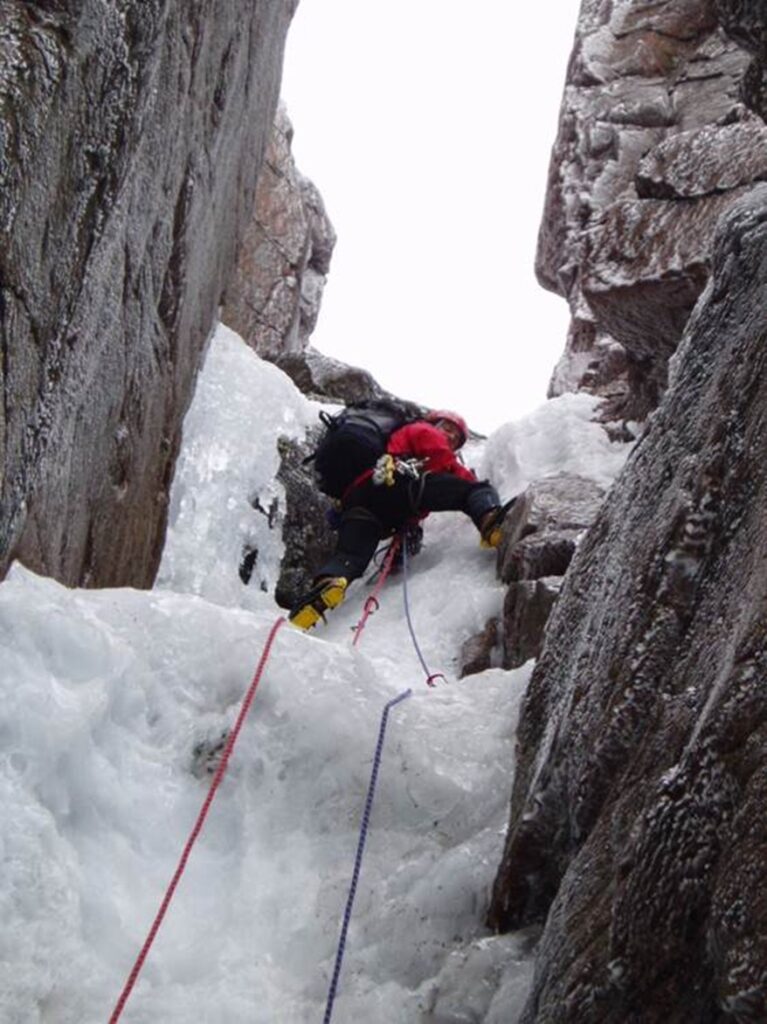
1935 April 13 – is a grand wee climb in the Cairngorms and has always been a wee favourite of mine. Sometimes the wind can funnel up the route. It has a good wee ice pitch, depending on build up of ice, and with all the modern gear is a fun climb. In 1935 it must have been a real adventure with one axe and cutting steps. Add to this walking from Glenmore Lodge it would be a longer day than today!
The Vent -First Ascent E.M Davidson, R.E Stoddart, M. Mc Bain. J. Geddes . H. Harrison. MMC. The climb started at 1400 hours due to heavy snow. A group of 5 including 2 ladies, left Glenmore Lodge and started the climb at 1400 hours.
Reached plateau at 2000 hours –
Back at Lodge at 2400 hours. A big day then the report that the dinner was still provided but unfortunately the pudding was burnt! I hope I am around for the 100 anniversary to be taken up by two ladies!
The MMC Poem taken from the Journal of 1938
This wretched Club it is a pest,
It lures me from my Sunday rest,
To flounder over bogs and heather,
And climb high hills in any weather.
To rise at all unearthly hours,
And show my best resistance powers,
By scrambling over rock and boulder
To some elusive spur or shoulder
With promise of a view at last
Is met with mist and icy blast
And ‘stead of far flung distant land
I see an inch from where I stand.
The forecast is great for the MMC Bus meet to Loch Quoich – anyone who is out may have a great day the forecast looks good. I hope the walk in along the road from the bus 7 ks is not to bad. I must get my kit ready!
The forecast is great for the MMC Bus meet to Loch Quoich – anyone who is out may have a great day the forecast looks good. I hope the walk in along the road from the bus 7 ks is not to bad. I must get my kit ready!
Early Start for Loch Quoich a great area!
Posted on October 21, 2012 by heavywhalley.MBE
Early start for the trip with the Moray Mountaineering Club bus meet to Loch Quoich. The bus leaves Forres at about 0720 so an early start for me. It will be a 2 to 2 and a half hour drive, the last bit along the cul-de-sac road leading to Kinlochourn. If the MOD had got their way in the 70’s, they would have bought the Knoydart area, and the plans were to put a road to Mam Barrisdale. Well done to all those who fought this and kept this area a sacred part of wilderness Scotland for all to enjoy. It just shows what you can do if you try.
The road into Loch Quoich Loch Chuaich) reservoir situated west of Loch Garry , approximately 40 km north west of Fort William. The name means “loch of the cup or quaich” The drive up Glen Garry is now part of the Glen Garry hydroelectric project commissioned by the North of Scotland Hydro-Electric Board in the 1950s. The dam on Loch Quoich is the largest rockfill dam in Scotland at 320 m long and 38 m high. The scheme was completed in 1962. Mostly, people come for the big Munros of this area; they are big hills and wonderful viewpoints. I hope to enjoy a new Corbett, but the bus only goes as far as the bridge, so I have a long road walk to start, if anyone is about to give us a lift.
Bonnie Prince Charlie was on Sgùrr nan Eugallt when he was on the run and heading north. Charlie was chased through the rough bounds, against the grain, Eugallt was so nearly a ridge too far. The hazardous crossing of guarded Glen Cosaidh completed, the Princes party had big problems descending the wild corries to the north of the long ridge of Sgurr nan Eugallt. Somewhere above Coire Shubh, it is said that the prince fell on steep cliffs. Quite ironic, as although the hill is still big and rough, it is now the easiest hill in all Knoydart. It is the highest of a well defined group of mountains that lie south of loch Hourn, stretching from Barrisdale to Loch Quoich. Although its summit is lower than many nearby neighbours, it is cut off from all its higher neighbours by a ring of deep glens. Despite being in a very wild and remote area, it can be easily ascended from a ruined roadside cottage 4 km to the east of its summit, where there is limited parking space. But the road is single track and the cottage is 20 miles from the nearest main road. Due to its isolation and insufficient height to qualify for a Munro, Sgùrr nan Eugallt is infrequently climbed according to the guide? There was a dilemma what is the highest point seemingly it is the West summit I hope I can get to it today, anyway it is a grand area to be in. I will let you know! I just checked my head torch to find it broken, worth checking every-time you go out especially at this time of year. Worth remembering?
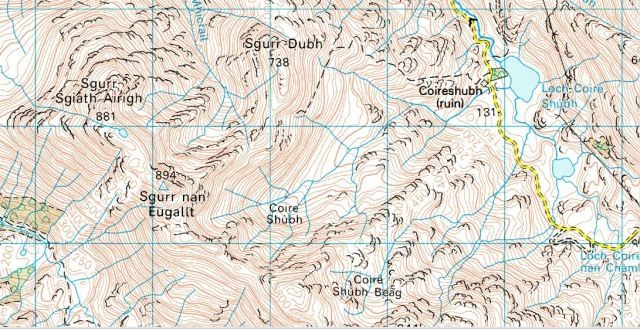
Sgurr Nan Eugalit – Kinlochhourn magestic
Posted on October 22, 2012 by heavywhalley.MBE
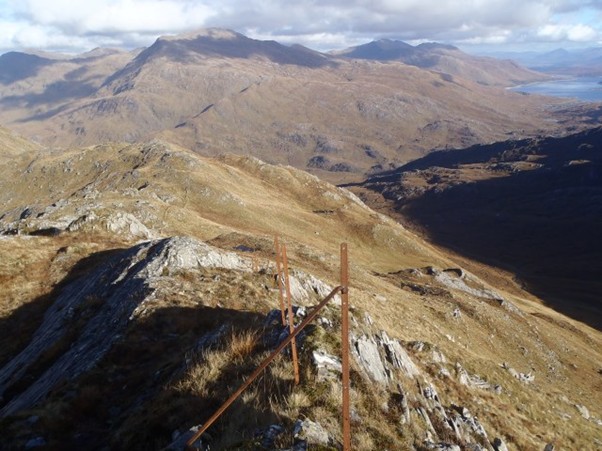
The Moray Mountaineering Club bus meets are a great way to get out on the hills cheaply and meet every month. The bus picked us up at 0720 in a dark Forres and on the way we were treated to an incredible red sky. After a stop at Inverness in the mist we picked up some more members and then went off down to Loch Garry and Loch Quioch. This is a really narrow road, and what a great job the driver made of it. The views in this area are spellbinding and the hills were clear apart from a wee cloud near the summits. About 40 early morning risers had their day planned and most hills were getting climbed by small groups. Gleuoraich, Spidean Mialach and the other Corbett Sgurr an Fhuarain a big day as well. The stags were roaring, and some big beasts were down to the road, looking so impressive with the rut still ongoing.
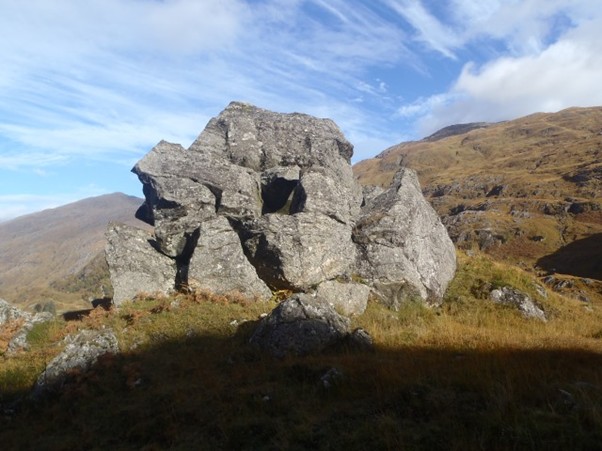
We were the last party off the bus, and the driver managed to get us about 2ks past the bridge, but we still had a fair road walk about 6-7 ks to the start of the hill. I was in some great company, Natasha, Fiona and Allen, stalwarts of the club and very fast walkers. It was incredible the views we had, and Stags appeared regularly to give us a bellow and get the cameras out. It is downhill to the start of the hill, and we made good time in the sunshine. No time to waste, it was a quick drink then up the wet stalkers path that winds its way up the hill. Views opened as we gained height, and the others pulled away, all in their own worlds. Familiar hills came into view the huge mountain that is the Saddle, the Kintail Hills and then Rough Bounds of Knoydart. The sun, the colour of the bracken is incredible and worth all the pain of a constant pull up. The path skirts several outcrops and then makes its way to a lovely ridge. More views, Beinn Sgreithal, Ladhar Bheinn, Sgurr Na Ciche, all majestic mountains with tales to tell. The summit is a wee scramble the way I went then the lonely trig point but this is not the top. A further 15 minutes takes you to the summit, where the views explode, the sea and mountains are everything. It is the lesser known hills in this wild area that make it so interesting, some involve huge days to get one summit in, what a place to be.
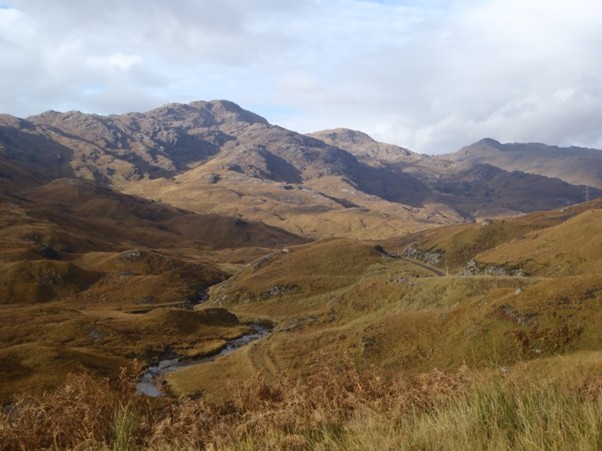
Time was moving it was after 2, and we had to be back at the bus by half past 5. We were about 12 ks away. I had hardly eaten anything my stomach was upset, but we had to get going and made up time down the steep ridge, my knees now in bits. I lost the path, sorry on the way down and we took a shortcut down a deer path! We were soon on the road getting my ears bent about not listening to the girls! Then Fiona realised she had lost her camera, it is up on the hill still, we think? Then the long walk back uphill. feet sore, praying for a lift. After an hour, I heard a car, put on my limp and my “retreat from Moscow gait”, and was soon heading back to the bus in the car. The more ethical members of the party refused a lift, but I was in heaven thanks “Mr Carlisle” a fellow walker who took pity on me. The bus had been moved a few extra ks further away so it was a bit longer walk for the rest of the group. I got a bit of banter about my lift from the other club member’s but I have done my apprenticeship of days of road-walking!
The bus headed off to pick up all the happy walkers, what a great day and though a bit late managed a refreshment stop for 20 minutes on the way home. I got back about 2200 a long day, body aching, getting old, but great company, views and what a place to be. Worth the effort, of course! Off to Glenmore Lodge for a chat about Avalanches, there was a wee bit of snow on the big Affric hills yesterday!
Visit to Glenmore Lodge and the Public Wind farm Enquiry at Aviemore.-
Posted on October 23, 2012 by heavywhalley.MBE
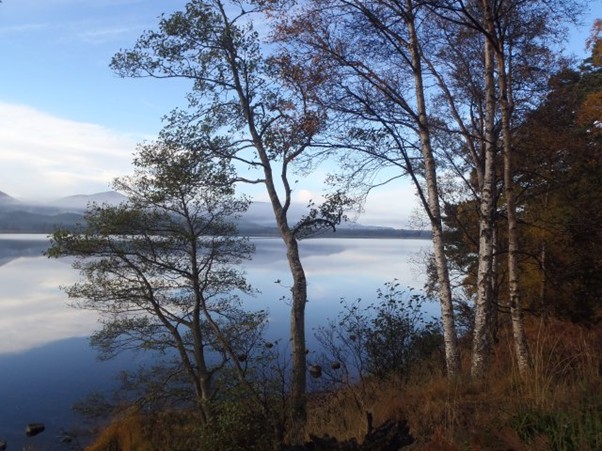
It was a beautiful drive to Aviemore today, the Dava Moor is such a bonnie place and has great views when clear of the Cairngorms every time I am on this road. Yesterday, with a smattering of snow on the high tops, and with a deep mist covering the Spey Valley, it was lovely. This view and its beauty could be spoiled by another planned wind farm. Two developers are trying to secure permission to build a total of 43 turbines, each 360ft tall, on hills overlooking Dava Moor, on the edge of the national park, despite the plans being rejected by councillors and gathering more than 2,000 objections farms nearby. I pray this does not happen, but more on this later!
I was heading for a meeting with Mark Diggins who runs the Scottish Avalanche Information Service (SAIS) at Glenmore Lodge. In a small office at Glenmore Lodge is the nerve centre of the Scottish avalanche service. Myself and Bob Sharp had recently completed a collation of Scottish Mountain Rescue Stats based on all the reported Mountain Rescue callouts involving avalanches. I am working with Mark to see if we maybe can combine them with the Stats from the SAIS to give us a big picture into what has happened in the last 20 years in Scotland. It was great to have chat and look forward to what we can learn for the future. The website of the Avalanche Service is a great site www.sais.gov.uk/ The report for the season 2010 – 2011 is on the website and an informing read, highly recommended. Those who work in Glenmore are blessed with such a grand place to work. The Mountain Leadership Board, the Mountain Rescue project Offices and the Mountain Safety Officer all are in this wonderful facility All great characters and sound mountaineers worthy of a blog on what they do! I left with a load of ideas and a lot of work to do!
The weather was so good I wanted a wander but I had promised to support some great friends at the wind farm public enquiry, which was running in Aviemore. It is important to go and see what goes on. It is being held in the MacDonald resort in Aviemore. I managed a couple of hours, I could not believe the paper work involved as the room was full of interested parties all with a library of paper on each aspect. The cost of such an enquiry must be huge? Whatever your views, it was enlightening and great to see the John Muir Trust and Chris Townsend and friends there giving support to their cause. I am all for alternative power but this has gone too far and I will be amazed to see the outcome of this enquiry. This current government in Scotland which I support in Scotland has lost the plot; wind farms are everywhere. There seems to be no plan. Alec Salmond says he loves this land, but this is a loser in my view for him in many ways. What a mess we are leaving it is not just the turbines but the access roads and the thousands of tons of concrete that will be used and left as there is no policy to put things back as it was? I agree we must look at all alternatives of power surely this is not the answer. I admire those who try to protect this wonderful land, not oppose every change, but fight for what is right. Have a look at the map in the Press & Journal yesterday of Scotland’s proposed wind farm sites. Even better, have a look at the M74 and see what has happened. What would John Muir have said?
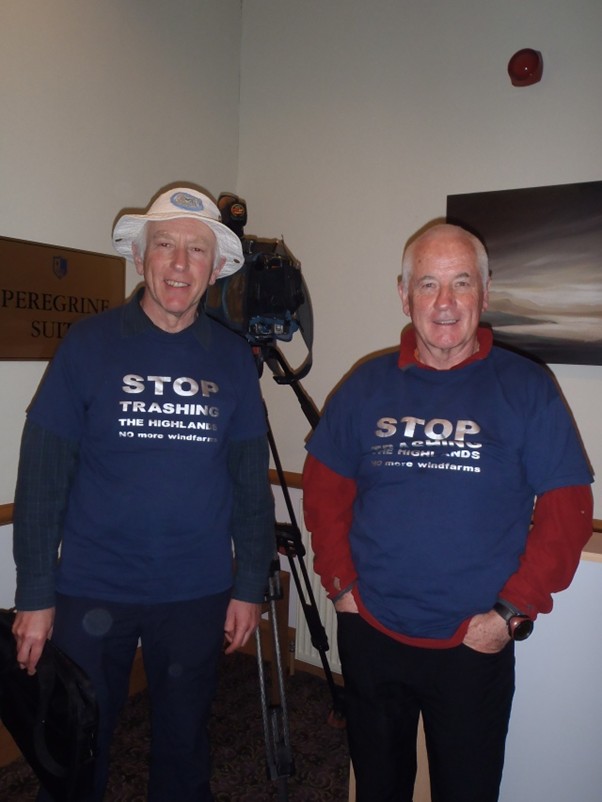
The environmental warriors at the enquiry at Aviemore – good people who care about this country. Please, if in Aviemore, look in at the Public Enquiry and see what is going on! This is your land that is at risk and what we leave for the generations to come. Is this the legacy we leave
Allt Duine in the Mondadhliaths – Why bother? Who cares?
Posted on October 24, 2012 by heavywhalley.MBE
We take so much for granted in a modern life and only have to look to yesterday for the helicopter crash of the Shetlands to see how dangerous life can be. Thank God that all survived the ditching, and hopefully the enquiry will get to the cause of such an accident. Getting oil and gas from such a hard, wild place should never be taken for granted and we should remember those who work in such conditions. In my view, the wealth that has been wasted from the oil and gas in the Seas offshore should have been used to look to the future and not wasted by various governments. It was never an infinite resource and we should have used some of these revenues to look at other alternative types of energy. Would we not have some of the current problems we have today?
The press up in the North of Scotland has a daily piece about the Wind farm enquiry in the Mondadhliaths at Aviemore over the next few days. Many people have spoken to me about it, and there are so many views. I am amazed at how many are now opposed to them, especially in the wild areas of natural beauty. People who are normally not outspoken (unlike me) have had enough, and it is great to see many of the Outdoor Agencies working together. There is strength in numbers, especially against huge companies that are making huge profits from the taxpayer. They employ clever councils with no expense spared, have we a chance? Please have a look at what is going on and the plans for the future, especially the map of proposed wind farms for this great country! It is a frightening prospect.
Allt Duine in the Mondadhliaths – Why bother? Who cares?
Posted on October 24, 2012 by heavywhalley.MBE
We take so much for granted in a modern life and only have to look to yesterday for the helicopter crash of the Shetlands to see how dangerous life can be. Thank God that all survived the ditching, and hopefully the enquiry will get to the cause of such an accident. Getting oil and gas from such a hard, wild place should never be taken for granted and we should remember those who work in such conditions. In my view, the wealth that has been wasted from the oil and gas in the Seas offshore should have been used to look to the future and not wasted by various governments. It was never an infinite resource and we should have used some of these revenues to look at other alternative types of energy. Would we not have some of the current problems we have today?
The press up in the North of Scotland has a daily piece about the Wind farm enquiry in the Mondadhliaths at Aviemore over the next few days. Many people have spoken to me about it, and there are so many views. I am amazed at how many are now opposed to them, especially in the wild areas of natural beauty. People who are normally not outspoken (unlike me) have had enough, and it is great to see many of the Outdoor Agencies working together. There is strength in numbers, especially against huge companies that are making huge profits from the taxpayer. They employ clever councils with no expense spared, have we a chance? Please have a look at what is going on and the plans for the future, especially the map of proposed wind farms for this great country! It is a frightening prospect.
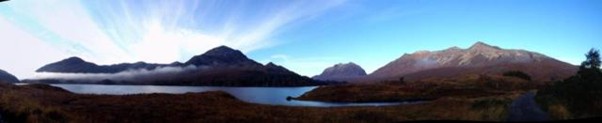
Who cares about the wild land?
Is it the Landowner who owns it
For the sport of Kings?
They do what they wish.
Is it the Wind-farm operators,
Who will leave a concrete mess,
Is this the best we can do?
It seems that the government
Has lost the plot, needs must
Or we go bust?
This land is special, it is ours by birth
Help save it, fight for it,
Or it will be gone.
Forever!
Weather change on the way!
Posted on October 25, 2012 by heavywhalley.MBE
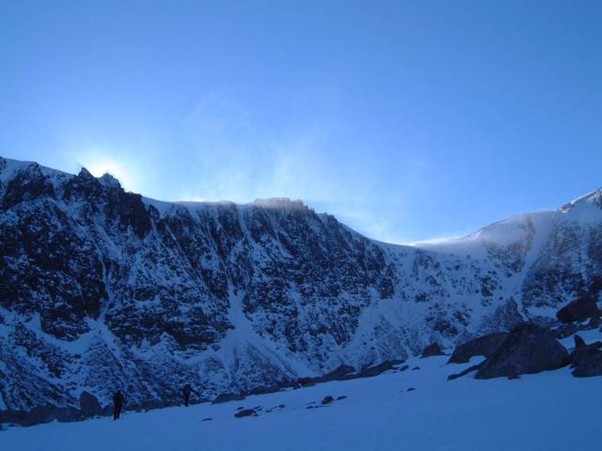
Windy Condition’s in the Cairngorms – the unusual light shows where the snow being blown off the plateau is being dumped by the wind. A good piece of information on the journey into the climb or hill and may indicate where the snow has dumped.
I was planning on going out to the Cairngorms on Friday but it will be decided when I see the latest weather forecast on the great weather website MWIS.
At present for Friday, it is not bad, we will see. We are so lucky having such information available nowadays. Always remember it is still just a forecast, and each mountain corrie can vary at times in the winter. The clocks go back this weekend, and I am sure adding that to the wintry hills, it will make people think/get away earlier to save walking out in the dark due to the change in daylight. Ensure that the torch is working, mine was broken when I checked it last weekend! It always catches us out, that first burst of winter. Worth remembering?
Fridays weather for the Cairngorms!
Northerly, typically 25 mph. But small
threat late in day of strengthening
quickly from Northwest toward 40 mph.
Mostly fairly small, but small threat
later of considerable buffeting
becoming widespread.
Snow flurries, mainly Cairngorms.
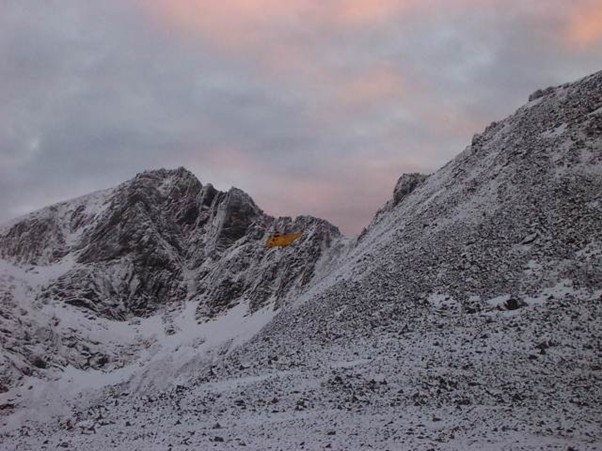
A great sight for many, the Sea King flying in the mountains, we should never take this service for granted or the work done by all the crews of all the SAR Helicopters. How small it looks against the great cliffs, especially in winter
Windfarm reply and a bit of cold weather now here!
Posted on October 26, 2012 by heavywhalley.MBE
Due to feeling a bit under the weather, I have decided not to go out on the hills today, the I have a bit of a cold coming on; yesterdays soaking at golf in Elgin did not help. It was very wet and with that Northerly wind and wind chill, it was a long, cold 4 hours. In the end, the sun came out at least. I will be off later to get some wood for my stove today to build up my winter stocks, the fire is on all day, and the heating is going. I must be getting old but have felt the cold this week?
The usual discussions on the golf course, and so many views it is frightening how few know what is really going on in this crazy world. Many still see the great wind farm debate as a magic cure to the UK”s dwindling power resources, the propaganda has been well sold to “Mr Public” I had an interesting call from another worried man David about the article “I wrote Who cares” in my blog, he was very passionate about the state we are getting into and advised me to read the following book in an interesting discussion. “Have you read John Etherington’s book called “The Wind Farm Scam”? He explains in reasonably intelligible language why wind farms are a scam and how we, as consumers, are paying. It’s utter madness.
And it is utterly monstrous what is proposed at Allt Duine. The visual intrusion would be shocking, and that’s before you consider the damage to the environment with access roads, and the fundamental ineffectiveness and inefficiency of wind turbines – that with every additional MW of windpower, you must have a base-load energy provision from a reliable source – because sometimes, unsurprisingly, the wind doesn’t blow.
We should actually all be ashamed that it has come to this – that ‘we’ (humans) have allowed, in the early 21st century, through our planning policies, an application for such a development in that location (not that I think ANY location is acceptable) to even get to this stage is an absolute disgrace. “He like many, would love to do more, but the pressure of work and family limits what he can do.
My advice is to discuss it at work. with friends, and my defence is go and have a look at the road to the M74 and the forests of windfarms that are now in sight. Is this what we want? I would also ask to join the John Muir Trust and help them fund the fight and help educate the rest of Scotland before it is too late!
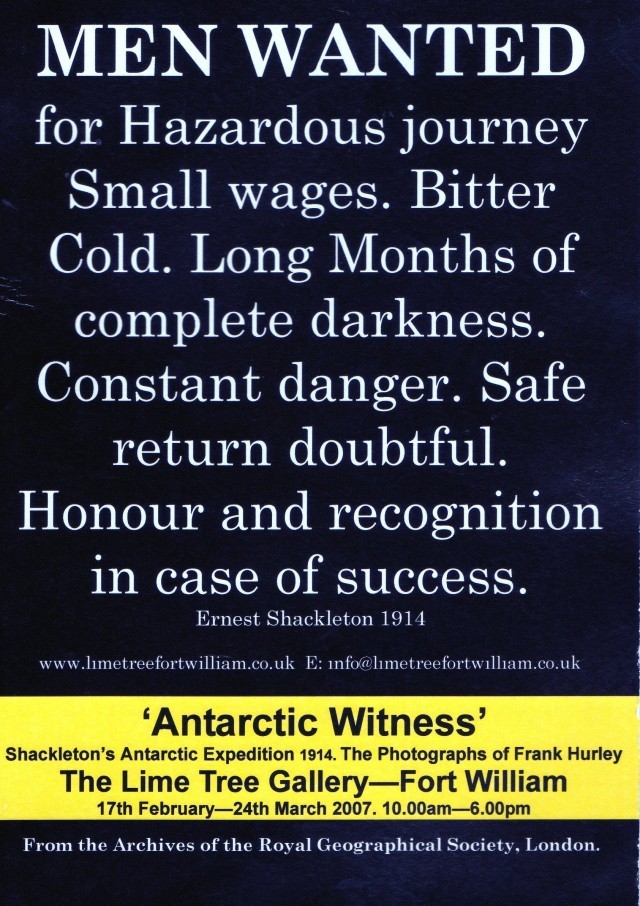
On a happier note I just wanted to draw your attention to the fact that Cinema Nairn will be screening “The Great White Silence”, Herbert Ponting’s documentary about Scott’s journey to the South Pole, on Friday 23 November at Nairn Community & Arts Centre – starts at 7.30 pm, tickets on the door £5.00. Please spread the word amongst the mountaineering community, your help is much appreciated. I will be going to this screening, it should be a great night.
Silly season! Well done again HMS Gannet.
Posted on October 27, 2012 by heavywhalley.MBE
A few days ago, the Sea King aircraft, from HMS Gannet in Ayrshire, had to land on the mountainside as visibility dropped to 40 metres. Petty Officer Mike Henson took to the hill in search of the trio, who were 3,000ft up on the Munro Beinn a’Chroin in the Trossachs.
The three walkers began their day out in the mountains in clear weather, but were caught out by clouds closing in around them near the summit. None of them had a map or compass with them, and they were using a smartphone to navigate. The trio became disoriented and cold in the misty conditions. In the end, all were located a bit cold but unhurt, just another few lines in the paper of a good job by the Rescue Services. Well done to the crew at HMS Gannet a great bunch of people.
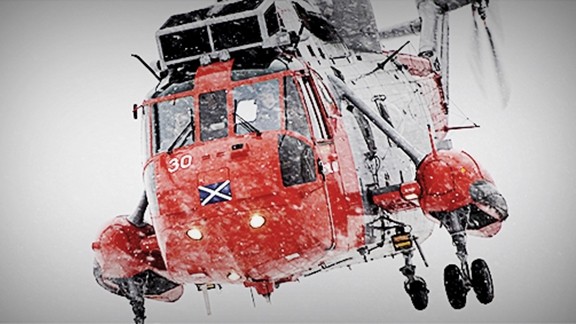
It is at times the same old story, but if you can afford a smartphone then you can have a couple of maps and a compass at least with the party? How many times will we hear this winter? If out in the hills, please be sensible, accidents can happen so easily, but try not to be be to daft? The clocks go back this week, daylight is less, and winter is here now, so please be aware and have fun in the short days.
HMS Gannet are Britain’s busiest rescuer. We’re scrambled every day of the year – twice on many – saving lives from Northern Ireland to Edinburgh, the Isle of Man and Lake District to the slopes of Ben Nevis, covering an area of 98,000 square miles (12 times the size of Wales…) with just three Sea King helicopters.
Their off winter climbing in the Cairngorms – Simple pieces of kit – The whistle – essential!
Posted on October 28, 2012 by heavywhalley.MBE
The UKC Climbing forum has a thread on winter climbing over the last few days. Andy Nisbet, that pioneer of Scottish winter climbing, has been out with friends climbing the first routes in the Cairngorms. The Message, Hidden Chimney Direct, Pot of Gold and Pygmy Ridge were climbed in Coire An’t Sneachda and in Corrie an Lochan, “Fallout Corner” grade 6/7. Conditions were said to be good, the turf was frozen, and the powder not too bad. That is it all started again, the unique fun that is Scottish winter mixed climbing with the Northern Corries going to be busy as long as the cold spell stays. Have fun all and be safe! How crazy are we mountaineers?
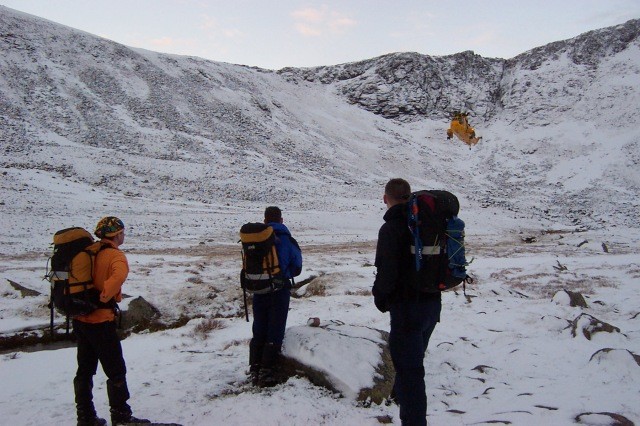
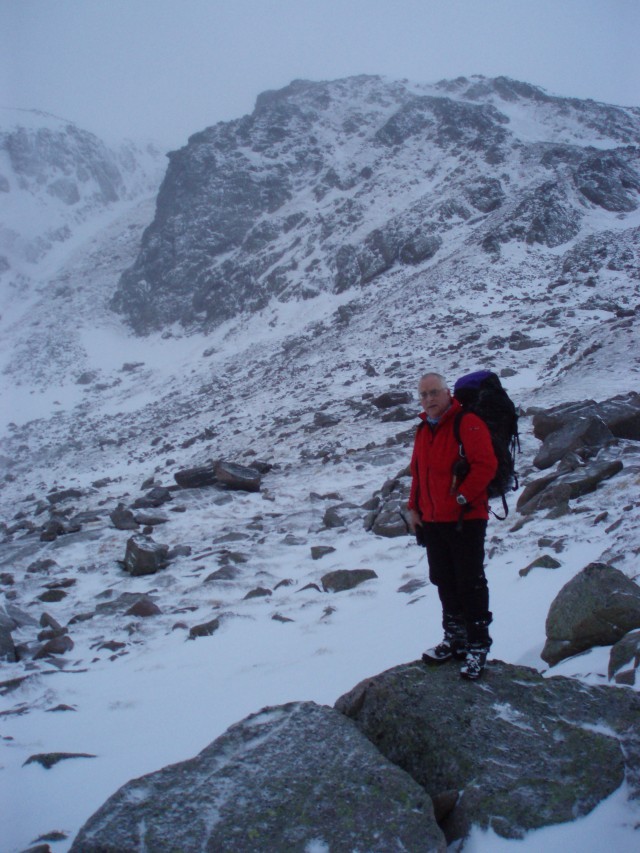
We used to chase early conditions at times in our youth with long walks out to Coire Sputan Dearg near Ben MacDui in search of the first routes! Long walks back across the plateau , usually in the dark, made this character building for the younger troops! With the easy access of the Northern Corries and the popularity of the Mess of Pottage an ideal crag to climb in the modern way.
The whistle
“Keep very quiet came over the radio – stop and listen for 5 minutes. It was a wet, misty day in Skye, and we were looking for a missing walker who had been out all night on the Skye ridge. I never heard it, but a SARDA Dog ran off and straight to the casualty, who was up on high ground, cragfast, he was using a whistle. That was over 35 years ago, and it showed me how effective a simple whistle can be in the mountains, especially when the weather is poor. They are cheap and simple and such a great aid. Another time, we were walking near Hells Lum in summer when we heard a whistle and a solo climber had got cragfast on the great cliffs. Lucky for him, we were passing and the mighty Wessex was about and quickly got him off the crag! The whistle is so handy and so cheap, and even in today’s days off technology, it is still has a place in your personal kit. It is even worth attaching one to your harness in case of an accident on the crag as some leave their bags below the routes!
This is a quote from the crewman on board the Sea King from Gannet who rescued the walkers without maps and compasses during the week.
“Fortunately, they had a whistle which they were able to blow to give me an indication of where they were – the easiest thing was to tell them to stay in one place and for me to go to them,” the crewman said. “They had been lost for about two hours by the time I got there.“Although none of them were hurt, the job was still pretty urgent. At the very least, it would have taken them two hours to walk off the mountain, even if they had known where they were going.
Take a whistle and learn the signal for rescue. Six good long blasts. Stop for one minute. Repeat. Carry on the whistle blasts until someone reaches you and don’t stop because you’ve heard a reply – rescuers may be using your blasts as a direction finder. If you don’t have a phone signal and you are alone, use your whistle and torch to send a distress signal: 6 whistle blasts or torch flashes in quick succession, repeated every minute until help arrives. It may save your life.
You have been Trumped!
Posted on October 29, 2012 by heavywhalley.MBE
I have just watched the programme “You have been Trumped” at last on Donald Trump property developer. As a golfer who loves golf in Scotland, I have read lots on both sides. It was to be an interesting programme. I was shocked!
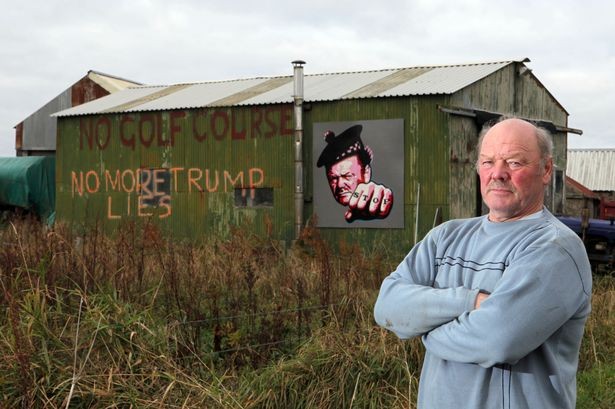
The 95-minute film tells the story of Donald Trump’s attempts to build what he claims will be ‘the greatest golf course in the world’ on one of Scotland’s last remaining wilderness areas. The resort, which the Scottish Government gave the green light following the most contentious planning inquiry in the country’s recent history, involves building two golf courses and 15 hundred houses and a luxury hotel on a site described by scientists as ‘the crown jewels of Scotland’s natural heritage’ north of Aberdeen.
’Everybody needs beauty as well as bread, places to play in and pray in, where nature may heal and give strength to body and soul.
John Muir
’Everybody needs beauty as well as bread, places to play in and pray in, where nature may heal and give strength to body and soul.
John Muir
The 95-minute film tells the story of Donald Trump’s attempts to build what he claims will be ‘the greatest golf course in the world’ on one of Scotland’s last remaining wilderness areas. The resort, which the Scottish Government gave the green light following the most contentious planning inquiry in the country’s recent history, involves building two golf courses and 15 hundred houses and a luxury hotel on a site described by scientists as ‘the crown jewels of Scotland’s natural heritage’ north of Aberdeen.
BBC – Autumnwatch from just down the road at Aigas Field Centre
Posted on October 30, 2012 by heavywhalley.MBE
Autumnwatch will be based at the Aigas Field Centre, in the beautiful Scottish Highlands. Just down the road from Inverness, it is a beautiful place. It’s one of the finest areas in the country to experience autumn wildlife, and it will be right at the heart of the action. Nestled in a wooded glen and surrounded by dramatic mountains, Aigas is home to some of the UK’s most iconic animals, from highland specialists to familiar garden wildlife. In the forest, there are many types of animals. Birds of prey cruise over the moorland, while foxes and small mammals hunt in the undergrowth, and a loch is home to a family of beavers. I will be looking forward to this programme as the Stags and deer are looking great just now. There’ll be 4 live shows on BBC 2 from Tuesday 30th October until Friday 2nd November, with Autumnwatch Unsprung on Friday.
This weekend is the Annual RAF Kinloss/ Leuchars Mountain Rescue Reunion at the Highlander Hotel in Newtonmore. This is a great event where many meet for a get together. The dinner is on in Saturday at the Hotel, and at 1700 myself and Joss Gosling an ex Team Member from the 1950’s will be doing a chat before the dinner at 1700. The chat is on Beinn Eighe and the Lancaster crash in March 1951. Joss was on the team at the time of this tragedy and has some unique photos of the crash and what exactly happened.
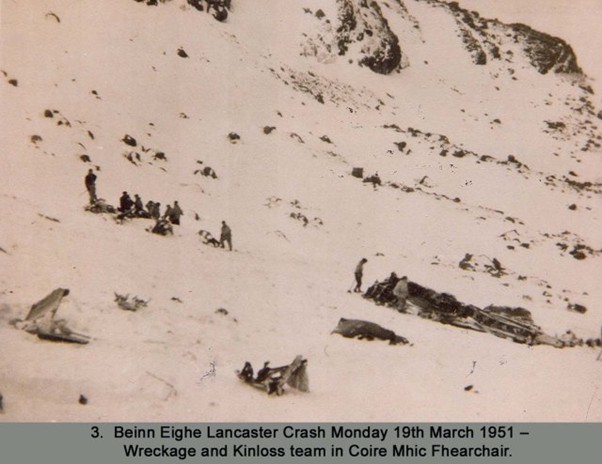
The Lancaster crash on Beinn Eighe in 1951 the RAF Kinloss Team with the wreckage. Photo Joss Gosling collection.
Joss was a very young man at the time, and the crash had a huge effect on him all his life. He speaks of a different era, and the Scottish Highlands were so far away for most. Travel was very difficult, and places like Torridon were a long distance away on very poor roads. Few were on the mountains at this time, and the RAF Teams were not equipped or trained for what they encountered. Beinn Eighe, in summer or winter, is an incredible mountain and must have been so intimidating for a young Joss and the team. In the end, they did their best in a very difficult time, and it will be humbling to work with Joss on this wee chat on Saturday night. I will take the story forward from after the crash and the huge changes that occurred in Mountain Rescue after this incident. Up to the 60th Anniversary in 2011, where we took 4 hours to walk in to the crash site in conditions identical to what occurred all those years ago. Joss was there at a wee meal we had after in the Kinlochewe Hotel after a hard day out, and we had a great night with some incredible stories. The Torridon and Kinlochewe Mountain Rescue Team were with us on the day, and there is now a great bond between them and Joss. Many of the locals helped with the casualty evacuation after the crash, when the snow melted. Many of the crew were taken off the hill on the highland ponies, which took several months to complete due to the conditions. It must never be forgotten that the human loss of life after such an accident and that these were all the people who died in a tragic accident on a huge Torridon Mountain. Recently I took a nephew to the crash site; he was born just after his Uncle the navigator, Flt Lt Robert Strong, was killed.
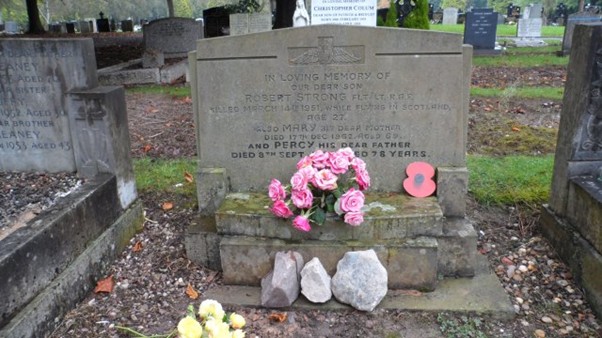
He had just lost his mother, who was the Flt Lt Strong’s mother and never knew the story of the crash and what happened all these years ago. He investigated and wanted to visit the site. It was a moving day as we reached the first of the wreckage for all of us even after all these years.
Lest we forget!
Early days of Mountain Rescue. Glenmore Lodge 1957
Posted on October 31, 2012 by heavywhalley.MBE
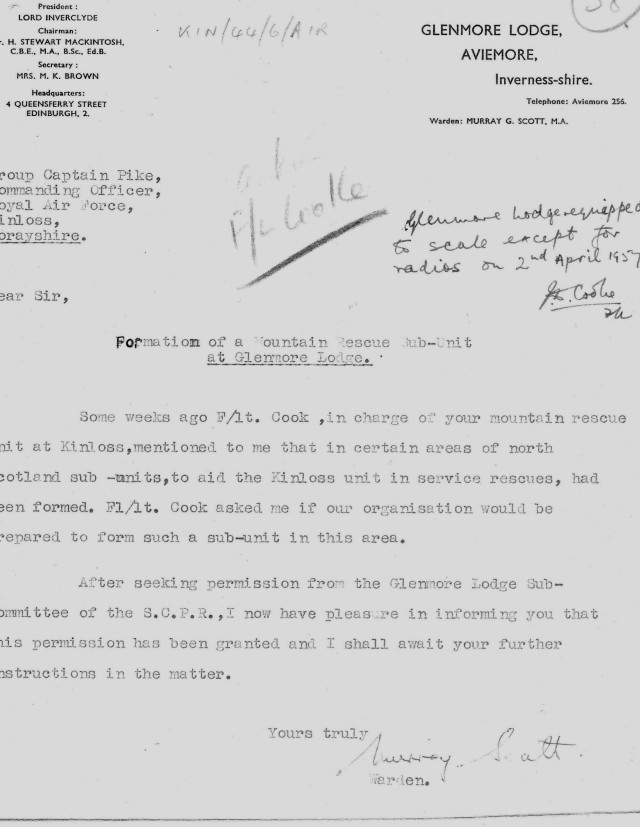
Glenmore Lodge Letter 1957 – a recognised MRT Unit. How times have changed! Since its beginnings in 1947, Glenmore Lodge has been involved in Mountain Rescue. All Glenmore Lodge staff contribute in some way to forming a rescue response, but at the heart of the team lies the experience of the ‘Lodge’ instructional staff. I thought this may be of interest to some out there. The RAF Teams had sub-units of kit all over the Highlands at Skye, Glencoe, Fortwilliam and in the North West. Many forget that it was the local keepers and people who assisted mountaineers in the past, as still happens today. Nowadays, Glenmore Lodge has many outstanding mountaineers in their staff and working with Cairngorm MRT have been at the forefront of Mountain Rescue for many years; many owe their lives to their skills. Glenmore Lodge MRT – The work of the instructors takes them to many wild and inhospitable places around Scotland; however, there is one area they know better than any other – the Cairngorms. This combination of skills, experience and local knowledge creates a unique asset to Mountain Rescue within the Cairngorm area. We work very closely with the Cairngorm Mountain Rescue Team and RAF 202 Squadron Search and Rescue. Indeed, Glenmore Lodge is frequently used by both these teams as a base for communications and refuelling.
Glenmore Lodge as the National Outdoor Training Centre runs rescue training and advice for individuals and teams in all aspects of Mountain and Swiftwater Rescue.
We should never take for granted the efforts of those who came before us. As I said, I am working on the epic that was the Beinn Eighe Lancaster Tragedy with Joss Gosling, who was a member of the RAF Kinloss team on the incident in 1951. How they cope with the weather and the conditions they worked in is amazing in the 1950’s is amazing. Every time I research I find something new about this tragedy, and hopefully will pass the story on to future generations.
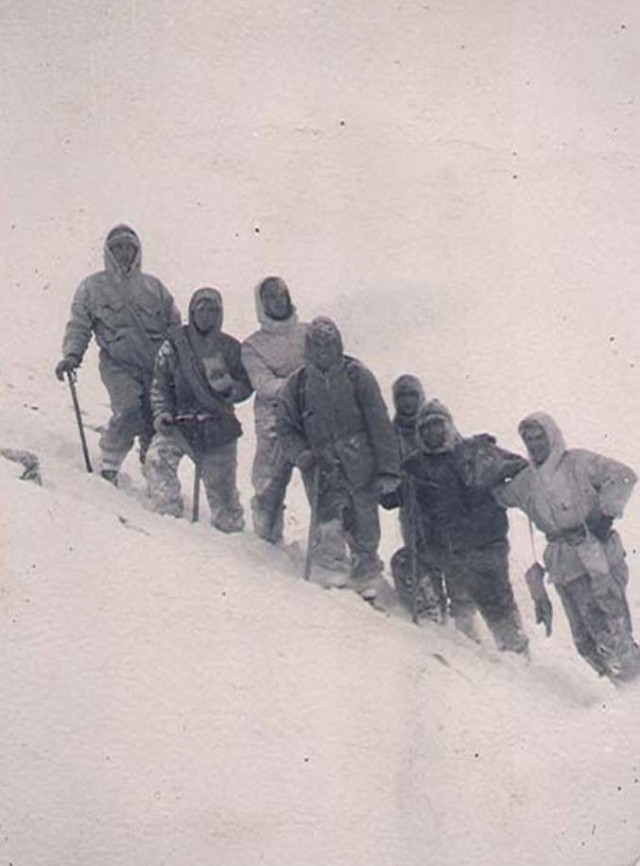
Not yet Available